What Maintenance Should I Do Right After Getting a Car?
Buying a new or used car is an exciting milestone, but it’s also a responsibility. One of the most important aspects of owning a car is making sure it’s well-maintained from the start. What maintenance should I do right after getting a car? This is a common question among new and used car owners. Right after purchase, specific tasks need to be completed to ensure your vehicle runs smoothly, stays safe, and lasts longer. In this blog, we’ll walk you through the essential maintenance steps to take after buying a car, whether it’s a new car or a used one. From oil changes to tire checks, these steps are crucial to keeping your vehicle in great shape. At Torrance Motors, we provide expert maintenance services to keep your car in top condition.
Essential Maintenance Tasks After Buying a New Car
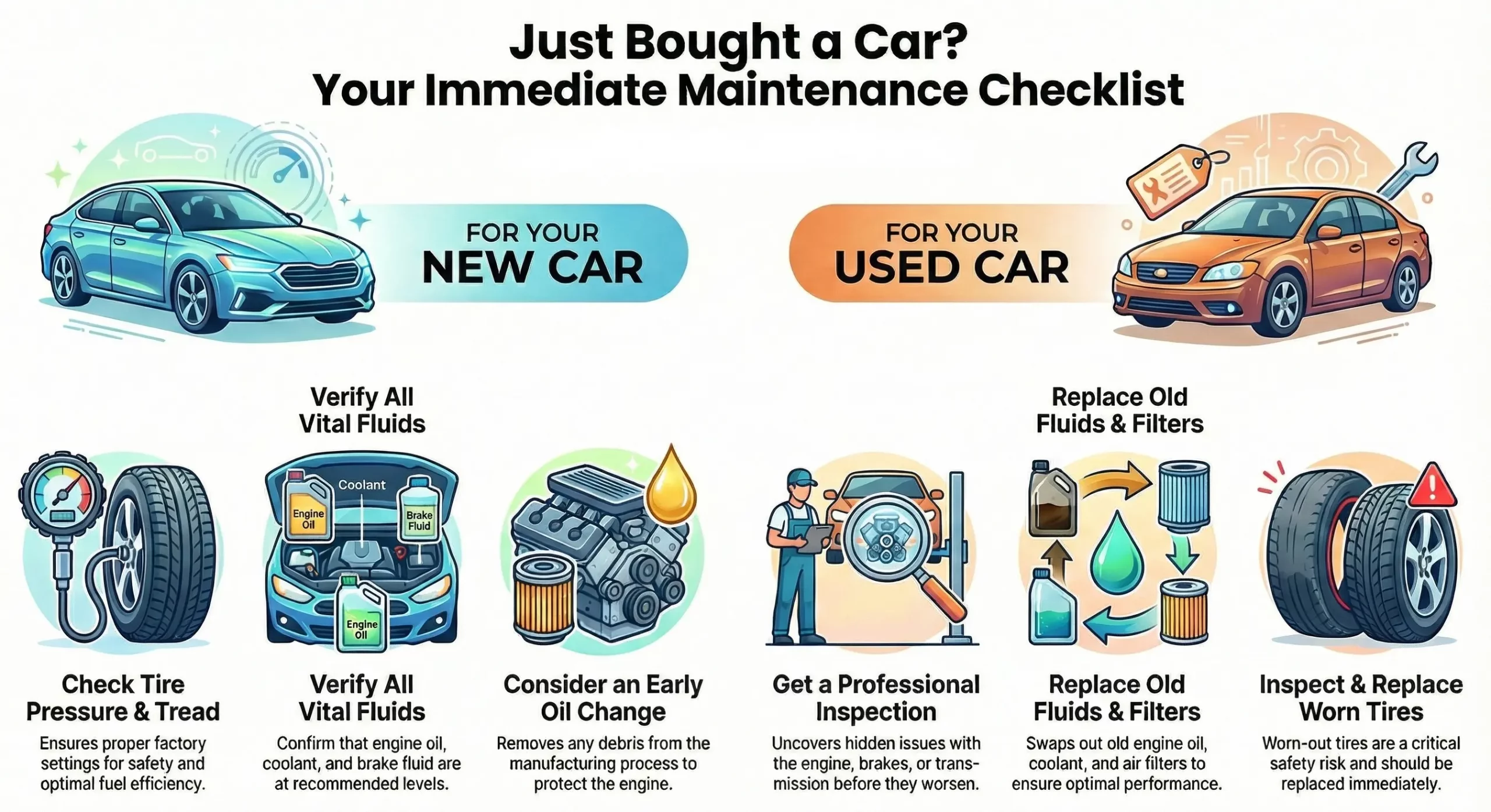
Even though a new car is generally in excellent condition, certain checks and maintenance tasks should still be done to ensure it stays that way. Here’s what you should do right after purchasing a new vehicle.
1. Change Engine Oil and Oil Filter After Purchase (If Required)
Even though new cars often come with oil that’s good for a few thousand miles, some manufacturers recommend changing the oil and filter shortly after purchase to get the vehicle into its maintenance routine. Doing this early on can help ensure that any impurities or debris from the manufacturing process are removed, keeping your engine running smoothly.
2. Check Tire Pressure and Tire Tread Depth for Safety
Proper tire pressure and good tread depth are essential for safe driving and optimal fuel efficiency. It’s important to check the tire pressure immediately after getting your car, as it may not be set correctly by the factory. Additionally, inspecting the tread depth helps ensure your tires will perform well, especially in different weather conditions. Maintaining the correct pressure and tread depth can improve your car’s handling and reduce tire wear.
3. Check and Top Up Essential Car Fluids
When you get a new car, checking the vital fluids such as engine oil, coolant, brake fluid, and power steering fluid is essential. While most new vehicles will have adequate fluid levels, verifying this ensures that the car operates efficiently and safely from the start. Keeping the fluids at optimal levels prevents issues like engine overheating or brake failure.
4. Inspect and Replace Engine Air Filter if Needed
A clean air filter helps the engine run smoothly by ensuring it gets the necessary airflow. After purchasing a new car, it’s a good idea to inspect the air filter, especially if your car is due for its first service. If the filter appears dirty or clogged, replacing it can help maintain engine performance and fuel efficiency.
5. Check Car Battery Health and Electrical System
Car batteries are crucial for powering all electrical systems. Checking the battery’s health right after purchase ensures it’s working properly and helps prevent the inconvenience of being stranded with a dead battery. If the car will be exposed to extreme weather, it’s crucial to inspect the battery’s condition and replace it if needed.
Essential Maintenance Tasks After Buying a Used Car
Used cars may require more immediate attention than new cars, especially if they’ve been on the road for some time. Here’s a maintenance checklist for used car buyers to follow immediately after purchase.
1. Transfer Vehicle Title, Registration, and Insuranceister the Car
When you purchase a used car, transferring the title and registering the vehicle are crucial steps that should be done immediately. This ensures that the car is legally yours and prevents future issues with ownership. You’ll also want to ensure that your vehicle is adequately insured before driving it off the lot.
2. Get a Full Used Car Inspection by a Professional Mechanic
Used cars, especially those with high mileage, may have hidden issues that aren’t immediately visible. It’s essential to get your vehicle inspected by a professional mechanic to identify any underlying problems such as engine issues, transmission problems, or worn-out brake pads. This inspection gives you peace of mind and can save you from costly repairs down the road.
3. Replace Old Fluids and Filters in a Used Car
Used cars often have fluids and filters that need replacement. Even if the fluids seem adequate, old fluids can cause damage over time. Replacing old fluids (such as engine oil, coolant, and brake fluid) and air filters right after purchase ensures your car performs optimally and reduces the risk of engine damage or poor performance.
4. Inspect, Repair, or Replace Worn Tires
Tires are one of the most critical safety features of any car. Used cars may have worn-out tires that are unsafe or inefficient. Checking tire pressure, tread depth, and tire condition is essential. If the tires show signs of wear or damage, they should be replaced immediately to avoid accidents and ensure proper vehicle performance.
5. Check Timing Belt and Serpentine Belt Condition
The timing and serpentine belts are crucial to the engine’s function. If these belts are worn or close to their recommended replacement interval, it’s essential to replace them early. Worn belts can lead to severe engine damage, so inspecting and replacing them after buying a used car can prevent costly repairs in the future.
How to Track Your Car Maintenance Schedule Effectively
1. Create a Custom Car Maintenance Schedule by Make and Model
Your vehicle’s maintenance needs will depend on its make, model, and age. Refer to the car’s owner’s manual for the manufacturer’s recommended maintenance schedules. Create a personalized maintenance plan based on those recommendations to help you stay on top of oil changes, tire rotations, and other essential tasks.
2. Set Maintenance Reminders for Oil Changes, Tires, and Brakes
One of the easiest ways to stay on track with your car maintenance is by setting reminders. You can use your phone or calendar to set reminders for regular tasks like oil changes, tire rotations, and brake inspections. This way, you won’t forget essential service intervals and can avoid long-term damage to your car.
3. Keep a Detailed Car Service and Maintenance Log
Maintain a log of all the services performed on your car. This log should include the service date, mileage, type of service, and the mechanic or service center that performed the task. Keeping a detailed record of your car’s service history will help you stay on top of upcoming maintenance and is helpful if you plan to sell the vehicle in the future.
How to Save Money on Car Maintenance Without Sacrificing Quality
Car maintenance doesn’t have to be expensive if you take the right approach. There are several ways to save money while keeping your car in top condition without compromising on quality or safety. In this section, we’ll discuss strategies to help you reduce maintenance costs while keeping your vehicle running smoothly.
1. DIY Car Maintenance Tasks You Can Do Yourself
Many basic car maintenance tasks are simple and can be done by yourself, saving you money on labor costs. Here are some everyday functions that you can easily handle on your own:
- Changing Air Filters: Replacing an air filter is a quick and easy task that can usually be done in less than 30 minutes. A new air filter typically costs $20–$50, but doing it yourself can save you the labor cost.
- Replacing Windshield Wipers: Windshield wipers are essential for visibility during rain or snow. Replacing worn-out wipers is a simple task that costs around $10–$30, and you can easily find replacement wipers at any auto parts store.
- Checking Tire Pressure: Keeping your tires at the correct pressure is essential for safe driving and improved fuel efficiency. A tire pressure gauge costs only a few dollars, and checking the tire pressure takes just a few minutes.
By taking care of these simple tasks yourself, you can significantly reduce your maintenance costs and keep your car in excellent condition.
2. Preventive Car Maintenance to Avoid Expensive Repairs
Preventive maintenance is one of the most cost-effective ways to avoid expensive repairs. By addressing minor issues before they escalate into bigger problems, you can avoid costly fixes in the future. Here’s how to focus on preventative care:
- Regular Oil Changes: Keeping up with oil changes is one of the most effective ways to prevent engine damage. Skipping oil changes can lead to clogged engines, overheating, and significant repairs. By changing the oil regularly, you can ensure your engine runs smoothly and prevent costly repairs.
- Tire Maintenance: Regularly check tire pressure, rotate your tires, and replace them when necessary. This can improve fuel efficiency, extend tire lifespan, and prevent premature tire replacements, which can be pretty expensive.
- Brake Inspections: Your car’s brake system is vital to safety. Checking the brakes periodically and replacing the pads when they wear out can help you avoid more expensive repairs, such as replacing rotors or the entire brake system.
By focusing on these preventive measures, you’re not only saving money in the short term but also protecting your vehicle’s longevity.
3. Choosing a Reliable Mechanic for Long-Term Car Care
Finding a trusted mechanic can save you money on car repairs and maintenance over time. A good mechanic will offer fair pricing, transparent communication, and quality work. Here’s how to ensure you’re getting the best value:
- Do Your Research: Before choosing a mechanic, read reviews, ask friends or family for recommendations, and check for certifications. Reputable shops often have certified mechanics who are more efficient and provide higher-quality service.
- Get Multiple Estimates: If you’re faced with a significant repair, it’s always a good idea to get more than one estimate. This will help you avoid overpaying and ensure you’re getting a fair price for the work.
- Choose Preventive Services: Many auto shops offer maintenance packages or service plans where you can pay upfront for routine maintenance like oil changes, tire rotations, and inspections at a discounted rate. This can be a great way to save money in the long run.
At Torrance Motors, we provide competitive pricing on all our maintenance services, ensuring your car stays in top shape without breaking the bank.
How to Track Your Car Maintenance Schedule
One of the best ways to save money on car maintenance is by staying organized and proactive. Keeping track of your car’s service history and upcoming maintenance tasks helps you avoid missing critical check-ups. Here’s how to keep your car’s maintenance schedule on track:
1. Create a Custom Maintenance Schedule
Each vehicle has unique maintenance requirements, so creating a custom schedule based on your car’s make and model is crucial. Your vehicle’s owner manual provides detailed information on recommended service intervals for tasks like oil changes, tire rotations, and brake inspections. This schedule should be followed to ensure your car’s longevity and prevent issues from developing.
If you prefer not to handle the schedule manually, you can use online tools or apps like Car Maintenance Tracker to set reminders and keep track of service intervals.
2. Set Up Reminders for Each Task
Setting reminders helps you stay on top of your car’s needs without having to keep track of everything in your head. Use your phone or calendar to create recurring reminders for tasks like:
- Oil changes (every 3,000–7,000 miles).
- Tire rotations (every 6,000 miles).
- Brake inspections (every 12,000 miles).
These reminders will help you avoid skipping essential maintenance tasks and give you peace of mind knowing that your car is getting the attention it needs.
3. Keep a Log of Services
Maintaining a maintenance log is a helpful way to track all of the services performed on your car. This log can be kept digitally or physically, and should include:
- Date of service.
- Mileage at the time of service.
- Service performed (e.g., oil change, tire rotation, brake inspection).
- Cost of service.
Keeping a log helps you see when specific services are due and ensures you’re always prepared for upcoming maintenance. Plus, it can be helpful when selling the car, as it shows prospective buyers that the car has been well-maintained.
Common Car Maintenance Mistakes to Avoid After Purchase
Avoiding common maintenance mistakes can save you time, money, and stress. Here are some mistakes that car owners often make and how to prevent them:
1. Skipping Regular Car Maintenance Check-Ups
Skipping routine maintenance tasks like oil changes, tire rotations, and brake checks can lead to bigger, more expensive problems down the road. Regular check-ups help catch minor issues before they turn into major repairs.
2. Ignoring Small Car Problems That Become Major Repairs
A minor issue, such as a worn brake pad or a cracked air filter, can become a much larger, more costly problem if ignored. Address minor repairs as soon as you notice them to prevent them from escalating.
3. Ignoring Dashboard Warning Lights and Car Warning Signs
Your car’s dashboard is equipped with warning lights to alert you of issues. Ignoring these warning signs, such as the check engine light or low oil light, can lead to severe damage to your engine or other vital systems.
Conclusion
Performing essential maintenance tasks right after buying a car is a crucial step toward keeping your vehicle running smoothly for years. Whether you’ve just purchased a new car or a used car, taking care of your vehicle from the start can help you avoid costly repairs, improve safety, and maximize the car’s lifespan.
For expert maintenance services, Torrance Motors is here to help. We offer a wide range of services, including oil changes, tire inspections, and brake checks, to keep your car in optimal condition. Contact us today to schedule your first maintenance service and ensure your vehicle stays in top shape!
Frequently Asked Questions About Post-Purchase Car Maintenance
1. What maintenance should I do right after buying a new car?
After buying a new car, it’s essential to check the oil, inspect tire pressure, and ensure fluid levels are optimal. It’s also a good idea to inspect the air filter and verify the battery’s condition. These steps help ensure your car is running smoothly and efficiently from the start.
2. How often should I change the oil in my new car?
For most new cars, oil changes are typically needed every 3,000 to 7,000 miles, depending on the car’s model and the type of oil used. Always refer to your car’s owner’s manual for specific recommendations regarding oil change intervals.
3. Should I get my used car inspected immediately after purchase?
Yes, it’s highly recommended that you have your used car inspected as soon as possible. A professional inspection can uncover potential issues, such as engine problems, worn-out brake pads, or transmission issues that might not be immediately visible, helping you avoid costly repairs later.
4. How do I know when to replace my car’s air filter?
The air filter should be replaced every 10,000 to 15,000 miles or whenever it looks clogged or dirty. A clean air filter helps improve engine efficiency and fuel economy, while a dirty one can lead to poor engine performance.
5. What are the first steps after buying a car?
After buying a car, your first steps should be to register the vehicle, transfer the title, get insurance, and check for any immediate maintenance needs such as oil changes, tire pressure, and fluid levels. If it’s a used car, consider getting it inspected for any underlying issues that need attention.