
In today’s world, cars are more advanced than ever, with complex computer systems managing everything from engine performance to braking and safety features. While this technology makes driving easier and safer, it also makes vehicle maintenance more complicated. One of the most essential tools for maintaining a modern car is car diagnostic testing. Whether you’re dealing with an engine light, strange noises, or just want to ensure your car is running optimally, diagnostic tests can reveal hidden issues before they turn into costly repairs.
Understanding what car diagnostic testing is and why it’s important can help you maintain your car, save money on repairs, and avoid potential breakdowns. This guide will walk you through the basics of car diagnostics, how they work, and why you should have regular tests performed on your vehicle.
What Is Car Diagnostic Testing?
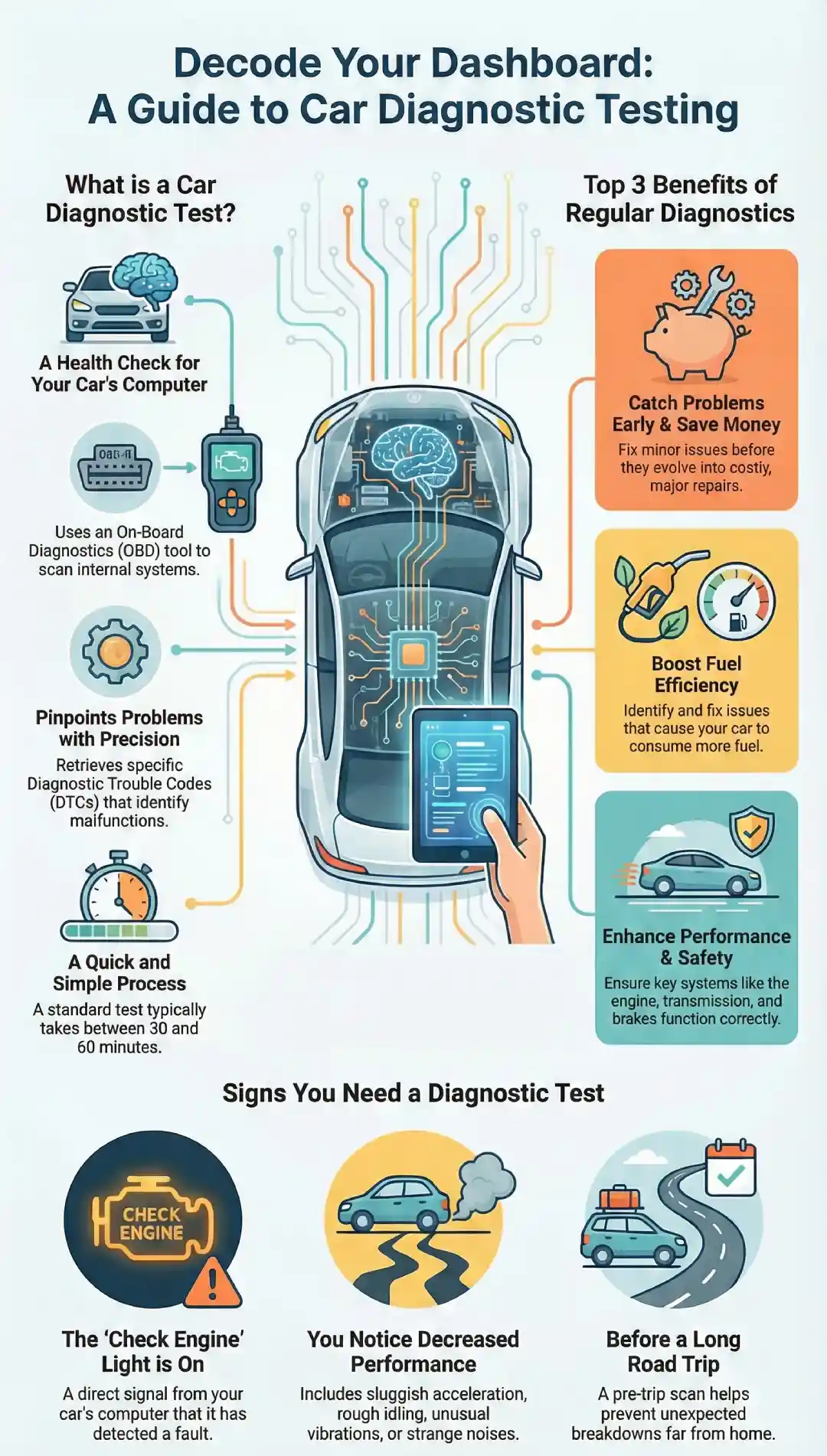
Car diagnostic testing is a process that involves using specialized tools to check a vehicle’s internal systems for issues. Modern cars have sophisticated onboard computers that control various parts of the vehicle, from engine performance to transmission function and even the airbag system. A car diagnostic test connects to these computers, retrieving data that can pinpoint any problems.
The test uses an On-Board Diagnostics (OBD) system to interact with the car’s computer, providing valuable insight into the vehicle’s health. The system will provide diagnostic trouble codes (DTCs) that indicate specific malfunctions in various parts of the vehicle.
Why It’s Important: Regular diagnostic testing can help detect issues early, saving you from expensive repairs and enhancing your car’s performance.
How Does a Car Diagnostic Test Work?
A car diagnostic test works by using OBD-II scanners or ECU diagnostic tools that interface with your car’s onboard computer. These tools are designed to read the Diagnostic Trouble Codes (DTCs) stored in the car’s memory when something goes wrong. The DTCs point to specific systems or components that may need attention.
Once the test is performed, it will generate a report that shows any fault codes related to various parts of the vehicle, such as the engine, transmission, exhaust system, and electrical components. These codes help a mechanic quickly identify where the problem lies and what needs to be repaired or replaced.
Key Benefits of Diagnostics:
- Precise identification of issues
- Faster repair times
- Avoids unnecessary part replacements
- Improves fuel efficiency and performance
Types of Diagnostic Tests Available
There are various types of diagnostic tests available for your vehicle, depending on the issue you’re facing and the diagnostic tools used. Some of the most common include:
OBD-II Diagnostics: This is the most common type of diagnostic test used in modern vehicles. It checks a wide range of systems, including the engine, exhaust, transmission, and brakes.
ECU Diagnostics: The Electronic Control Unit (ECU) is responsible for controlling most of the car’s functions. ECU diagnostics check for issues related to powertrain, emissions, and more.
Manual Diagnostics: For older vehicles, manual diagnostics may be performed, requiring the mechanic to interpret symptoms or manually check certain systems for errors.
Each diagnostic test uses a different set of tools and software, but all aim to provide a clear picture of the car’s overall health.
Why Is Car Diagnostic Testing Important?
Early Detection of Problems
One of the primary benefits of diagnostic testing is early problem detection. Many car issues can start small, and if left untreated, they can evolve into more serious, expensive repairs. Diagnostic testing allows you to catch problems early when they’re easier and cheaper to fix.
For example, a faulty oxygen sensor detected by a diagnostic test may cost only a few hundred dollars to replace. But if ignored, it could lead to reduced fuel efficiency, increased emissions, and eventually damage to the engine, costing thousands of dollars in repairs.
Prevention Is Key: Diagnosing problems early gives you the chance to make repairs before they affect other parts of your car.
Improved Fuel Efficiency
Another reason why car diagnostic tests are essential is to improve fuel efficiency. Problems such as a malfunctioning oxygen sensor, clogged fuel injectors, or issues with the exhaust system can reduce fuel efficiency significantly.
By identifying these issues early, a diagnostic test can help restore your car’s optimal fuel economy, saving you money at the pump. A car running at peak efficiency not only uses less fuel but also puts less strain on the engine, resulting in a longer lifespan for the vehicle.
Enhanced Vehicle Performance
Your car’s performance depends on a variety of interconnected systems that must all work properly. Over time, wear and tear can affect performance, leading to sluggish acceleration, rough idling, or poor handling. A car diagnostic test can pinpoint these issues, helping you fix them before they get worse.
For instance, if your vehicle’s transmission is slipping, a diagnostic test can help identify the issue with the transmission control module. Early detection can prevent transmission failure and the need for a full replacement.
Key Areas Diagnostics Can Improve:
- Engine performance
- Transmission smoothness
- Fuel system efficiency
- Exhaust system efficiency
Compliance with Emission Standards
In many areas, vehicles are required to meet strict emission standards. Diagnostic tests can check the emission control systems and identify any faults that could prevent your car from passing an emissions test. Problems with the catalytic converter, oxygen sensors, or other components can cause high emissions, leading to failed inspections.
Getting a car diagnostic test ensures that your vehicle meets the necessary emission standards, helping you avoid fines and contribute to environmental protection. In California, diagnostic testing is a core component of the Smog Check Program, ensuring that your vehicle’s emissions control systems are meeting state environmental requirements.
What Happens During a Car Diagnostic Test?
During a car diagnostic test, a mechanic will connect an OBD-II scanner or other diagnostic tool to your car’s onboard diagnostic port. The test will check a variety of systems within the vehicle, including:
- Engine Performance: Identifies issues with spark plugs, fuel injectors, and engine sensors.
- Transmission: Detects any irregularities in shifting or performance.
- Exhaust System: Checks for issues with the catalytic converter or oxygen sensors that may impact emissions.
- Braking System: Ensures that the ABS and other brake system components are functioning correctly.
- Electrical System: Detects any faults with the car’s battery, alternator, or other electrical components.
Each of these systems is tested for malfunctions or inefficiencies, and the diagnostic tool provides a detailed report.
Understanding Diagnostic Trouble Codes (DTCs)
When a diagnostic test is performed, it generates Diagnostic Trouble Codes (DTCs). These codes help identify exactly where an issue exists within the vehicle’s systems. For example, a code like P0300 could indicate a misfire in the engine, while P0171 might point to a lean fuel mixture.
What You Need to Know About DTCs:
- DTCs help pinpoint the exact issue.
- Each code is unique and corresponds to a specific problem in a specific part of the vehicle.
- Once the code is retrieved, it’s up to the technician to analyze the code and further investigate the issue.
How Long Does a Car Diagnostic Test Take?
Typically, a car diagnostic test can take anywhere from 30 minutes to 1 hour. The time required depends on the complexity of the test and the condition of the vehicle. If the issue is clear, the test might take less time, but if multiple issues are detected, it could take longer to fully diagnose the problem.
At Torrance Motors, we pride ourselves on providing efficient and thorough diagnostic services for our customers, ensuring your vehicle is in optimal condition.
How Much Does a Car Diagnostic Test Cost?
The cost of a car diagnostic test varies based on factors such as location, vehicle type, and the type of test being performed. On average, a standard OBD-II diagnostic test can cost between $50 to $150. More complex tests, like those for hybrid vehicles or advanced systems, may cost more.
However, investing in a diagnostic test can save you much more in repair costs by detecting issues early.
How Often Should You Get a Car Diagnostic Test?
Car diagnostic tests are not something that necessarily needs to be done on a fixed schedule unless your car is showing signs of an issue. However, it’s always a good idea to include a diagnostic test during your routine maintenance visit, ideally once a year. This allows you to keep tabs on the health of your car and catch any potential problems before they become major issues.
At Torrance Motors, we recommend that customers have diagnostic tests performed during their annual checkups. This ensures that your car’s systems are operating optimally and helps to prevent unexpected breakdowns. Regular diagnostic testing also allows our technicians to identify minor issues that may otherwise go unnoticed.
When to Consider a Diagnostic Test
While regular diagnostic tests are recommended during routine checkups, there are specific situations in which you should prioritize a diagnostic test.
When the Check Engine Light Comes On
One of the most obvious signs that it’s time for a diagnostic test is when the check engine light comes on. This light is triggered by the vehicle’s onboard computer system, which detects a problem and stores a Diagnostic Trouble Code (DTC) to identify what went wrong. When this light appears, it’s important to have your car scanned as soon as possible to avoid further complications.
The diagnostic test will retrieve the code, helping the technician pinpoint the issue, whether it’s something simple like a loose gas cap or a more serious engine malfunction. Ignoring the check engine light could lead to more extensive damage or expensive repairs down the road.
Before Long Trips
If you’re planning a long road trip, especially one that takes you through remote areas where help may not be easily accessible, it’s a good idea to have a diagnostic test done beforehand. A test before a long trip helps ensure that your car is in good condition and that there are no underlying issues that could cause problems while you’re on the road. For example, a cooling system or brake system issue, if left unchecked, could put you at risk of breakdowns in inconvenient locations. Scheduling a diagnostic test before your trip can save you from major headaches and ensure a smooth journey.
When You Notice Decreased Performance
Another sign that it’s time for a diagnostic test is if you notice a decrease in your car’s performance. This could manifest in many ways: rough idling, sluggish acceleration, or reduced fuel economy. If any of these symptoms appear, it’s important to have your car diagnosed quickly. Decreased performance can often be linked to issues with the engine, fuel system, or transmission. The sooner you address these issues, the better the chances of avoiding more serious and expensive repairs. A diagnostic test can help pinpoint the exact cause of the problem, making repairs quicker and more affordable.
If You’re Hearing Unusual Noises
Strange sounds, such as knocking, rattling, or grinding, coming from the engine, exhaust, or transmission should never be ignored. These noises are often early indicators of mechanical issues that can worsen if left unattended. If you hear any unusual sounds while driving or idling, it’s a good idea to bring your car in for a diagnostic test. The test will help identify the source of the noise, whether it’s an issue with the engine’s internal components, suspension, or exhaust system. Addressing the issue early can prevent costly repairs and ensure your car continues to run smoothly.
Signs You Need a Diagnostic Test
While the check engine light is the most common reason for getting a diagnostic test, there are several other signs that may indicate the need for one. It’s important to stay vigilant and recognize these symptoms so you can address potential issues early.
Increased Fuel Consumption
If you notice that your car is consuming more fuel than usual, this could indicate an issue with the fuel system. Common culprits include malfunctioning oxygen sensors, clogged fuel injectors, or problems with the air intake system. A diagnostic test will help identify which part of the fuel system is causing the inefficiency. Fixing these issues can help restore your car’s fuel economy, saving you money at the pump in the long run. It’s always better to catch these issues early, as they can lead to further engine damage if left unresolved.
Strange Odors or Smoke
If you notice any strange smells, such as burning rubber, oil, or a sweet odor, these could be signs that something is wrong under the hood. A burning rubber smell may indicate a slipping belt or a problem with the engine’s cooling system. A sweet smell, often associated with coolant, can indicate a leak in the cooling system. Oil smells may suggest that the oil is overheating or leaking. Regardless of the odor, these signs should be addressed immediately with a diagnostic test. Early detection can prevent these issues from escalating into more serious problems, such as engine overheating or oil damage.
Transmission Slipping
If your car has difficulty shifting gears or if you notice the transmission slipping when accelerating, it’s time to get a diagnostic test. A slipping transmission could indicate problems with the transmission control module, low transmission fluid, or a malfunctioning torque converter. It’s crucial to address transmission issues early to avoid long-term damage. If left unresolved, a failing transmission can lead to a complete breakdown, resulting in costly repairs.
Unusual Vibrations or Rough Idling
Rough idling or unusual vibrations could indicate a misfire, spark plug issue, or a problem with the fuel injectors. If your car shakes, vibrates, or feels unsteady while idling, it’s important to have a diagnostic test performed as soon as possible. These symptoms may also be a sign of an issue with the fuel system or the exhaust system. A diagnostic test can quickly pinpoint the issue, allowing you to fix it before it causes more serious damage to your vehicle.
Common Misconceptions About Diagnostic Tests
Myth #1: Car Diagnostic Tests Are Only for the Engine
One of the biggest misconceptions about car diagnostic tests is that they only check the engine. In reality, a comprehensive diagnostic test checks multiple systems in the car, including the transmission, brakes, fuel system, exhaust, electrical systems, and more. While the engine is often the most critical area checked, modern diagnostic tools can assess a wide range of vehicle components to ensure everything is functioning properly.
Myth #2: Diagnostic Tests Are Always Accurate
While diagnostic tests are incredibly helpful in identifying issues, they don’t always provide a perfect diagnosis. Sometimes, the DTCs retrieved may point to a problem, but further investigation may be needed to verify the exact cause. For example, a DTC may indicate a faulty sensor, but it could also be caused by wiring issues or a more complex system malfunction. In these cases, a technician may need to conduct additional tests or visual inspections to confirm the problem.
Myth #3: Diagnostic Tests Can Fix Car Problems
A diagnostic test is not a repair tool; rather, it’s a diagnostic tool that helps identify issues. Once the test reveals a problem, it’s up to the technician to perform the necessary repairs. The test helps pinpoint exactly what needs fixing, whether it’s a sensor replacement, fuel system cleaning, or brake repair.
Myth #4: Only Older Cars Need Diagnostic Tests
Another common misconception is that only older vehicles need diagnostic tests. While older cars may not have as many advanced electronic systems as newer models, modern cars are equipped with complex computer systems that require regular diagnostic checks. Even newer cars benefit from diagnostic tests to ensure everything is functioning as it should and to catch problems early before they become major issues.
Torrance Motors Diagnostic Services
At Torrance Motors, we provide expert diagnostic testing services for all makes and models of vehicles. Our certified technicians use the latest diagnostic tools to ensure a thorough inspection of your car’s systems. Whether you’re dealing with an engine light, poor performance, or you just want to ensure your vehicle is in top shape, we’ve got you covered. If you suspect your car needs a diagnostic test, don’t wait until the problem becomes more serious, schedule your diagnostic test at Torrance Motors today!
Our diagnostic services include:
- OBD-II Scanning and ECU Diagnostics
- Engine Performance Testing
- Transmission and Fuel System Checks
- Exhaust and Emission System Evaluation
- Electrical System Analysis
With our cutting-edge technology and experienced mechanics, we can quickly identify issues and recommend cost-effective solutions to get you back on the road safely. If you suspect your car needs a diagnostic test, don’t wait until the problem becomes more serious. Schedule your diagnostic test at Torrance Motors today and keep your car running at its best!
