
When driving around Torrance, ensuring your vehicle’s suspension is functioning properly is crucial for safety and comfort. A car’s suspension system is responsible for keeping the ride smooth, handling well, and ensuring stability during driving. However, just like other parts of your vehicle, the suspension system is prone to wear and tear. If you notice any issues, it’s vital to address them early to avoid serious damage.
How to Know if Your Car Suspension is Bad?
Sign #1: Uneven or Rapid Tire Wear
The suspension system plays a significant role in keeping your tires aligned and in good condition. It absorbs the shocks from the road and ensures that your car’s tires make proper contact with the road surface. When the suspension is damaged or worn out, it can lead to improper alignment, causing your tires to wear unevenly.
Symptoms of Uneven Tire Wear
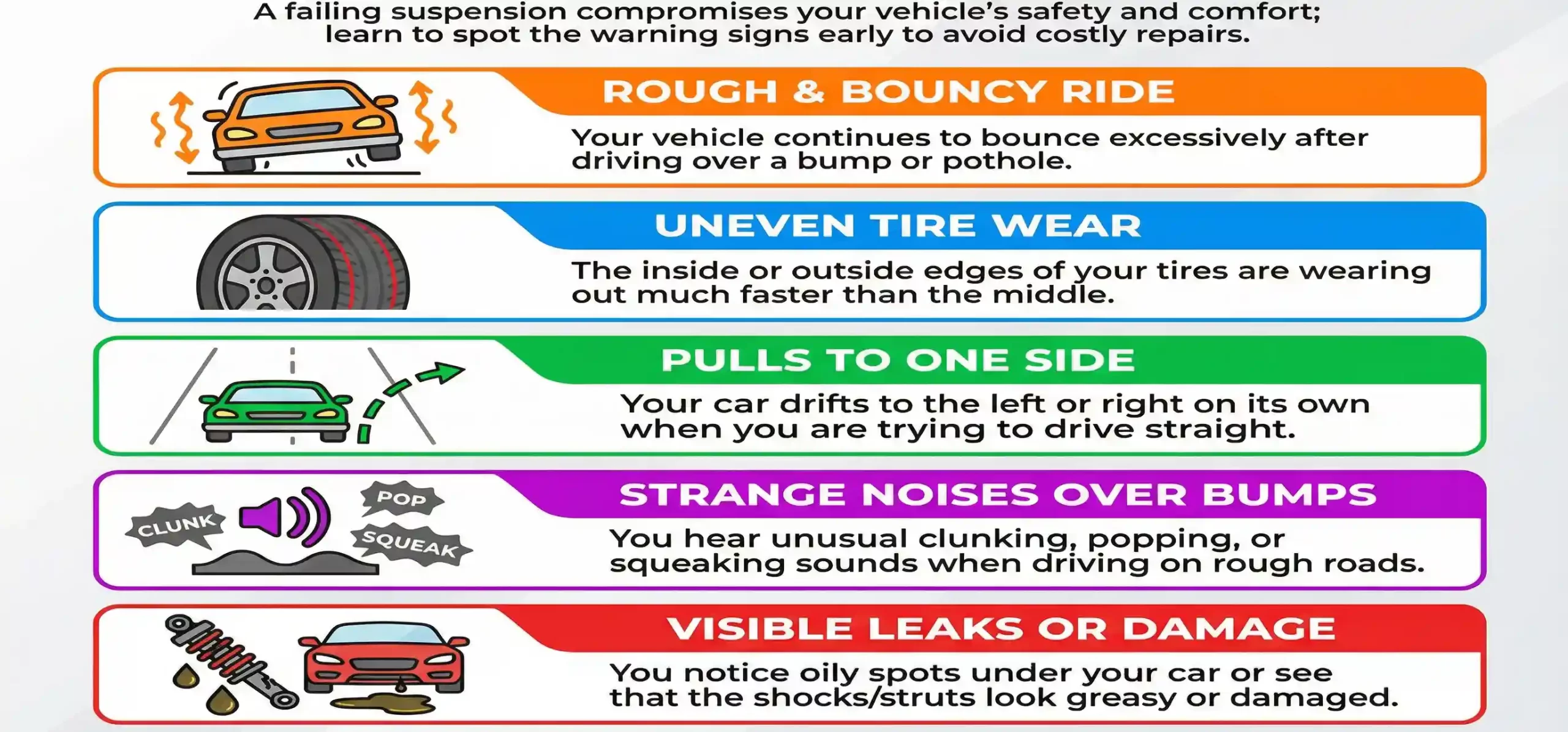
- Inner or Outer Tire Wear: If the car suspension is misaligned, you may notice that the inside or outside edges of your tires wear out faster than the middle. This is a clear sign that the suspension is not maintaining proper alignment.
- More Frequent Need for Tire Replacement: Uneven wear leads to faster deterioration of your tires, meaning you may need to replace them more often, which can be costly in the long run.
Prevention Tips
- Regular Tire Rotation: A simple and effective way to extend tire life is by rotating your tires regularly. This helps to ensure even wear across all tires.
- Suspension Inspections: Having your suspension system checked during routine maintenance can prevent issues that lead to tire misalignment.
- Proper alignment can help extend the lifespan of your tires and improve fuel efficiency.
Sign #2: Excessive Bouncing or Rough Ride Quality
A well-functioning bouncy car suspension ensures a smooth and comfortable ride, even when you encounter bumps, potholes, or uneven roads. The shocks and struts in the suspension system absorb these impacts, providing stability and comfort. When the suspension begins to fail, the ride quality can deteriorate, and you might experience excessive bouncing or rough handling.
Signs of a Rough Ride or Excessive Bouncing
- Bouncing After Hitting a Bump: One of the most noticeable signs of suspension trouble is when your vehicle continues to bounce excessively after driving over a bump or pothole.
- Difficulty Controlling the Vehicle: If your car sways or feels unstable when changing lanes or taking turns, it could be a sign that the suspension is no longer functioning properly.
Why This Is Dangerous
- Safety Risk: If left unchecked, poor ride quality can make it harder to control your vehicle, especially when maneuvering in traffic or making sudden stops.
- Increased Wear on Other Components: A failing suspension system can put undue strain on other vehicle components, like the steering system and brakes, leading to more extensive (and costly) repairs.
Prevention Tips
- Shock Absorber Replacement: Replace worn shock absorbers regularly to maintain ride quality and ensure your car stays responsive.
- Periodic Suspension Inspections: Make it a habit to have your suspension system inspected during regular service visits.
Sign #3: Pulling to One Side or Drifting During Turns
A properly functioning suspension helps maintain your vehicle’s alignment and steering stability. If you notice your car pulling to one side or struggling to steer, it could indicate that the suspension system is no longer supporting the vehicle evenly. This problem can affect your ability to steer safely, particularly during sharp turns or lane changes.
Symptoms of Pulling or Drifting
- Pulling to One Side: When driving on a straight road, if your car drifts to the left or right without you steering, this may be a sign that the suspension system has worn parts or needs alignment.
- Difficulty Steering Through Turns: If you feel resistance or delayed response when turning the wheel, it could indicate that the suspension is struggling to maintain the car’s balance during turns.
Why This Is a Warning Sign
- Dangerous in Traffic: A car that drifts or pulls unpredictably is harder to control, especially in heavy traffic or when making lane changes.
- Potential Underlying Issues: Pulling can be caused by damaged suspension components, misalignment, or worn-out bushings and joints, all of which need timely repair to prevent further damage.
Prevention Tips
- Get Regular Alignment Checks: Ensuring your alignment is correct will prevent the car from pulling and help the suspension system work as it should.
- Immediate Suspension Inspections: If you feel the car drifting or pulling, it’s time to have the suspension inspected by a professional mechanic.
If you are experiencing steering issues, our Suspension repair Services in Torrance can help restore your vehicle’s steering performance.
Sign #4: Noises When Driving Over Bumps or Rough Terrain
Suspension systems are designed to absorb road impacts quietly, but when components wear out, they often produce noises that signal an issue. If you hear unusual sounds when driving over bumps or rough roads, it’s crucial to investigate further. The type of noise can help pinpoint the specific part of the suspension that’s failing.
Types of Noises You May Hear
- Clunking Sounds: If you hear a low clunking noise when hitting bumps, it could be due to worn-out shock absorbers or strut mounts.
- Popping or Grinding Noises: A high-pitched popping or grinding sound may indicate that the suspension components, such as the struts or bushings, are loose or damaged.
- Squeaking Sounds: If you hear squeaking noises when driving over rough terrain, this could be a sign of worn-out rubber bushings or lack of lubrication in suspension joints.
Why This Needs Immediate Attention
- Component Damage: Persistent noise means that parts of your suspension are failing and could eventually break, leading to more significant problems and costly repairs.
- Safety Concerns: Noises from the suspension can also affect your ability to control the vehicle properly, especially when navigating rough or uneven roads.
Prevention Tips
- Regular Inspections: Have your suspension checked regularly to catch wear early and prevent further damage.
- Lubrication of Suspension Components: Ensure that suspension joints and bushings are properly lubricated to avoid squeaking and unnecessary friction.
- Prompt Repairs: If you hear unusual noises, schedule a suspension inspection with a professional mechanic immediately to avoid further issues.
Sign #5: Visible Fluid Leaks or Damaged Shocks
Fluid leaks are a clear sign that something is wrong with your suspension system. The most common cause of fluid leaks in suspension systems is worn-out shock absorbers or struts. These components are filled with hydraulic fluid that helps to absorb road shocks. When seals or gaskets fail, the fluid escapes, leading to poor suspension performance.
Symptoms of Fluid Leaks
- Oil Stains Under the Car: If you notice oil spots on the ground under your car after parking, this is likely due to leaking suspension fluid.
- Damaged Shocks or Struts: If the shocks or struts have visible cracks, rust, or fluid residue, it’s a sign they are damaged and no longer functioning properly.
- Car Sinks or Sags: If your car appears to sit lower than usual, it may be due to fluid loss in the suspension system, which results in reduced ability to absorb shocks and maintain proper height.
Why Leaking Fluid is a Problem
- Reduced Suspension Effectiveness: Leaking fluid means the suspension components can’t function as intended, leading to poor ride quality and increased wear on other vehicle systems.
- Worsening Damage: A small leak can quickly turn into a bigger problem if not addressed, leading to complete suspension failure.
- Safety Concerns: A leaking suspension can result in poor handling, reduced control, and increased risk of accidents.
Prevention Tips
- Regular Suspension Inspections: Check for visible fluid leaks and have your suspension serviced regularly to ensure that components are in good condition.
- Timely Shock Replacement: Replace damaged or worn shocks and struts as soon as you notice signs of fluid leaks to avoid further damage.
- Prompt Attention to Leaks: Any visible leaks should be investigated immediately by a professional mechanic.
Why Timely Suspension Repair is Crucial
Your vehicle’s suspension system plays a critical role in maintaining your car’s stability, comfort, and handling. When suspension issues arise, it’s important to address them as soon as possible. Ignoring problems can lead to more serious damage, increased repair costs, and compromised safety. Early detection and timely repairs not only save money but also prevent the inconvenience of being stranded due to suspension failure. In fact, the state of California recently updated its Vehicle Safety Systems Inspection (VSSI) Program to include rigorous checks of suspension integrity as a requirement for roadworthiness.
How Poor Suspension Affects Other Vehicle Parts
Suspension problems don’t exist in isolation. When your suspension fails, it often puts added strain on other important components, such as:
- Tires: Uneven tire wear due to suspension issues means your tires will wear out faster, resulting in more frequent replacements.
- Brakes: A poor suspension can cause the vehicle to bounce or sway, which affects how well your brakes perform.
- Steering System: Suspension issues can affect your steering response, making the vehicle more difficult to control.
A poor suspension can cause the vehicle to bounce or sway, which affects how well your brake pads and rotors perform during a sudden stop.
Increased Repair Costs and Safety Risks
If you continue driving with a damaged suspension, the issue will only get worse over time. What could have been a minor repair may escalate into a major overhaul if ignored. Moreover, driving with poor suspension affects your car’s handling, increasing the chances of accidents.
Prevention Tips
- Timely Suspension Inspections: Regular maintenance is the best way to catch issues early. Have your suspension inspected every 12,000 miles or as recommended by your mechanic.
- Prompt Repairs: Address any issues with your suspension as soon as they arise to prevent more expensive repairs in the future.
- Follow Manufacturer Guidelines: Stick to your car’s maintenance schedule for suspension and related parts to ensure optimal performance.
Routine Suspension Maintenance
Routine maintenance is key to extending the life of your suspension system. Here are some steps to ensure your suspension stays in good condition:
- Regular Suspension Inspections: Every time you bring your vehicle in for routine maintenance, have the suspension checked for wear and tear. Catching issues early can save you from more expensive repairs later.
- Replace Worn Parts Promptly: Suspension components like struts, shocks, and bushings wear out over time. Don’t delay replacing worn-out parts, as it can lead to more significant issues.
- Check Tire Alignment: Misalignment is often a cause of suspension problems. Ensure that your tires are aligned regularly to prevent uneven wear.
Driving Habits to Avoid Suspension Damage
- Avoid Potholes and Rough Roads: While it’s impossible to avoid every bump, minimizing exposure to rough roads and potholes can reduce the wear on your suspension.
- Drive Smoothly: Avoid sharp turns and sudden stops, as they can put unnecessary strain on your suspension system.
- Load Limits: Be mindful of your vehicle’s weight capacity. Overloading your car can damage the suspension and cause premature wear.
Why Waiting to Fix Your Suspension is Expensive?
Repairing a suspension issue early is always cheaper than waiting for a total failure. For example, replacing a worn sway bar link might only cost a few hundred dollars. But if you ignore that rattling sound, the extra vibration can cause your control arms or struts to fail, which can push repair costs over $1,000. Additionally, bad shocks put immense pressure on your tires. A single set of tires for a luxury BMW or a modern Toyota can cost as much as the suspension repair itself. By fixing the suspension now at our Torrance shop, you save yourself from the “cascading damage” that forces you to buy new tires and steering parts later.
Why Coastal Living in Torrance Affects Your Suspension
While the sea breeze makes Torrance a beautiful place to live, it presents a unique challenge for your vehicle. The salt-heavy air from the Pacific Ocean can accelerate the oxidation of metal suspension components and cause rubber bushings to dry out and crack prematurely. This is especially true for vehicles parked outdoors near the beach or those frequently driven on Pacific Coast Highway. At Torrance Motors, we often see local cars with “frozen” bolts or corroded strut mounts that wouldn’t normally fail in drier, inland climates. Regular inspections are the best way to catch this salt-related wear before a minor squeak turns into a snapped component during your morning commute.
Vehicle Suspension Warning Signs and Diagnostics
| Warning Sign | Symptoms and Indicators | Potential Failing Component | Associated Risks | Preventative Actions | Repair Cost Impact (Inferred) |
| Excessive Bouncing or Rough Ride Quality | Vehicle continues to bounce after hitting a bump; swaying or instability during lane changes or turns. | Shocks and struts. | Difficulty controlling the vehicle; increased wear on steering system and brakes; safety risk during sudden stops. | Regular shock absorber replacement and periodic suspension inspections. | High-cost cascading damage to steering and brake systems if ignored. |
| Visible Fluid Leaks or Damaged Components | Oil stains under the car; visible cracks, rust, or fluid residue on components; car sinks or sags. | Shock absorbers or struts (seals and gaskets). | Reduced suspension effectiveness; complete suspension failure; increased accident risk. | Regular inspections for leaks and timely shock/strut replacement. | High-cost due to potential for complete suspension failure and cascading damage to other systems. |
| Noises Over Bumps or Rough Terrain | Clunking (low), popping/grinding (high-pitched), or squeaking sounds. | Shock absorbers, strut mounts, bushings, or loose joints. | Component breakage; loss of vehicle control on uneven roads. | Regular inspections, lubrication of joints and bushings, and prompt repairs. | Minor for lubrication/sway bar links; high-cost (>1,000) if vibration causes control arm or strut failure. |
| Pulling to One Side or Drifting | Car drifts left or right on straight roads; resistance or delayed response when turning. | Worn-out bushings, joints, or damaged suspension parts. | Difficulty steering safely; high risk in heavy traffic or during lane changes. | Regular alignment checks and immediate professional inspections if drifting occurs. | Moderate for bushings or joints; high-cost if leading to steering system failure. |
| Uneven or Rapid Tire Wear | Inner or outer tire wear; faster deterioration of tires. | Misaligned suspension components. | Reduced fuel efficiency; more frequent and costly tire replacements. | Regular tire rotation, routine suspension inspections, and maintaining proper alignment. | Minor if limited to alignment; high-cost cascading damage if frequent tire replacements are required. |
How Torrance Motors Can Help
At Torrance Motors, we offer expert suspension diagnostics, repairs, and replacements to keep your vehicle running smoothly and safely. Our experienced technicians are highly trained in diagnosing suspension issues, whether it’s worn-out shocks, broken struts, or misalignment. We focus on identifying the root cause of suspension problems and providing the best solutions to restore your car’s handling and comfort.
Why Choose Us?
- Experienced Technicians: Our team is skilled in servicing all makes and models, ensuring that every suspension system is handled with care and precision.
- Comprehensive Inspections: We perform thorough inspections of your vehicle’s suspension system, checking every component, from shocks and struts to control arms and bushings.
- High-Quality Parts: We use only durable and reliable replacement parts, ensuring long-lasting repairs and optimal performance.
- Transparent Pricing: At Torrance Motors, we offer honest, competitive pricing with no hidden fees. We believe in providing clear advice and realistic estimates before any work is done.
Don’t wait for suspension issues to worsen. If you’ve noticed any of the signs mentioned above, contact Torrance Motors for a professional suspension inspection. Whether it’s a rough ride, strange noises, or pulling to one side, our team is ready to help. Schedule an appointment. Stay safe and enjoy a smoother, more comfortable ride with a well-maintained suspension system.
