Top Signs You Need a Car Tune-Up Now
Regular car maintenance is crucial to ensure that your vehicle runs smoothly and efficiently. One key service that can improve your car’s performance is a tune-up. How can you tell if you need a tune-up? A tune-up typically involves a series of checks and replacements, such as spark plugs, air filters, and fluids, to ensure that everything is working as it should. If you notice specific signs, schedule a tune-up for your vehicle. This blog will tell you the top signs that indicate your car needs a tune-up.
At Torrance Motors, we specialize in providing high-quality tune-up services to keep your car in top condition. Let’s explore the most common signs your car needs a tune-up and how to address them before they become more serious issues.
Common Warning Signs Your Car Needs a Tune-Up
1. Check Engine Light Is On (Engine or Emissions Issues)
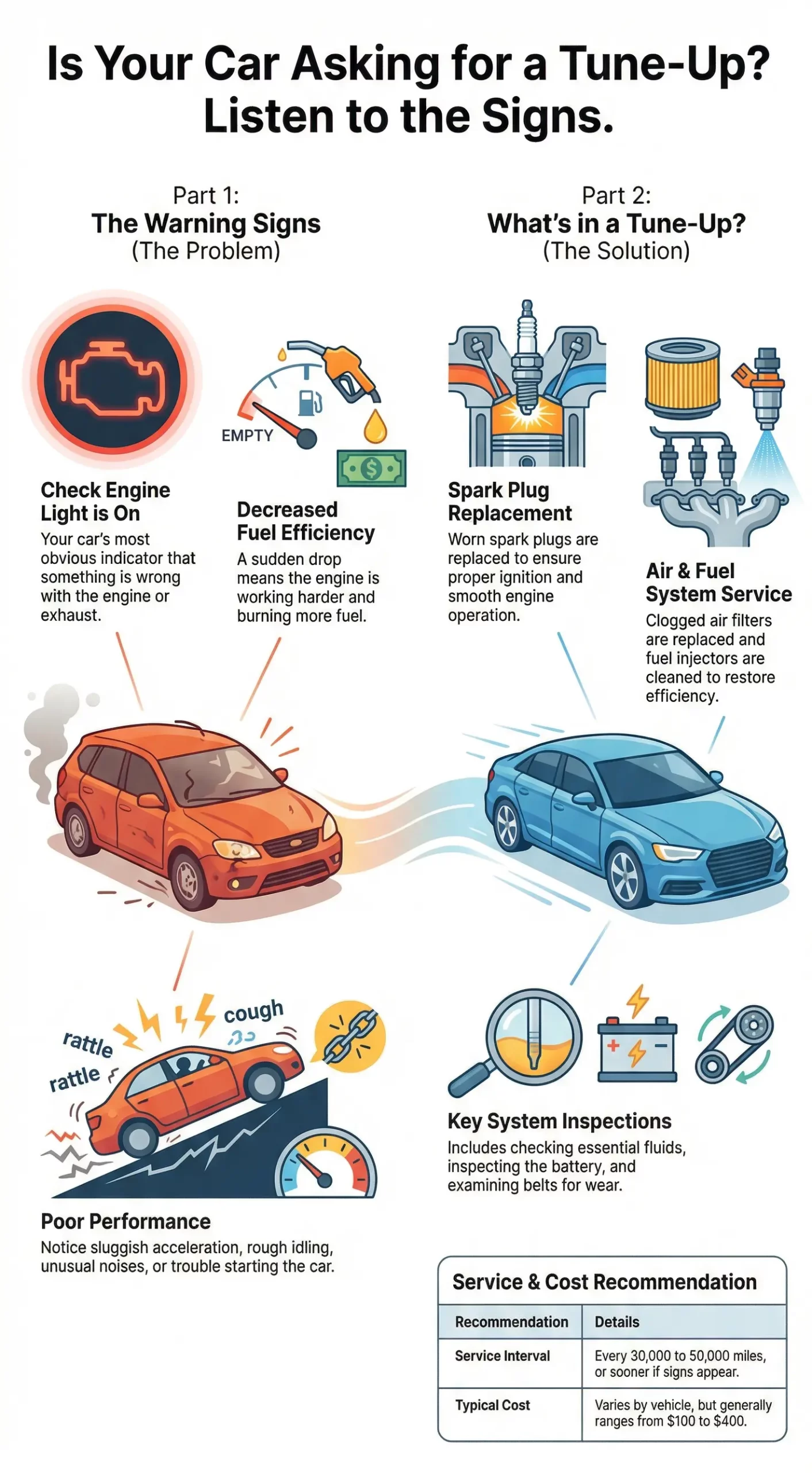
The check engine light is one of the most obvious indicators that something is wrong with your car. This light can come on for a variety of reasons, including issues with the engine, transmission, or exhaust system. When the engine light turns on, it’s an early warning that your car might need attention. Ignoring the engine light can lead to more significant issues down the road, so it’s best to act quickly. A tune-up can help diagnose and fix problems, ensuring your car runs smoothly and efficiently.
2. Sudden Drop in Fuel Efficiency (Poor MPG)
If you notice a sudden drop in fuel efficiency, your car might need a tune-up. Clogged air filters, worn spark plugs, or dirty fuel injectors often cause decreased fuel economy. These problems can cause your engine to work harder, burning more fuel. When this happens, not only do you lose out on savings at the pump, but you also risk damaging other parts of the engine. Scheduling a tune-up can address these issues, helping restore your car’s fuel efficiency and prevent further damage.
3. Rough Idling or Engine Vibrations at Idle
Rough idling is a sign that your engine is having trouble maintaining a smooth, consistent idle. This can happen for several reasons, such as dirty fuel injectors, worn-out spark plugs, or a clogged air filter. When your car idles roughly, it’s a sign that something is out of balance in the engine. If left unaddressed, this can lead to stalling or poor acceleration. A tune-up can help resolve idling issues by cleaning or replacing necessary components like the spark plugs or fuel injectors.
4. Unusual Engine Noises (Knocking, Pinging, Grinding)
Strange noises from your engine can be an alarming sign that something is wrong. Whether it’s knocking, pinging, or grinding noises, any unusual sounds from under the hood should be investigated. These noises could indicate a variety of issues, such as an engine misfire, loose parts, or a malfunctioning timing belt. A tune-up can help identify the source of the noise and provide the necessary fixes to prevent further damage to your engine.
5. Difficulty Starting the Car or Slow Ignition
If your car struggles to start or requires multiple attempts to turn on, it could be a sign that the spark plugs, battery, or fuel system is malfunctioning. Difficulty starting the car can stem from a variety of underlying issues, including worn spark plugs or a failing fuel pump. These problems can be easily addressed with a tune-up, ensuring that your car starts reliably every time you turn the key.
6. Sluggish Acceleration or Loss of Engine Power
If your car feels sluggish when you press the accelerator or seems to lose power while driving, this could indicate an issue with the fuel or air intake systems, or with the spark plugs. Sluggish acceleration can make driving frustrating and can be dangerous, especially when you need to accelerate quickly on highways or while merging. A tune-up can help restore your car’s power by replacing worn-out components, such as the spark plugs or air filters, and cleaning the fuel injectors.
7. Steering Problems or Car Pulling to One Side
If you notice your car pulling to one side or the steering feels off, it could be a sign of an alignment issue or a suspension problem. While these issues aren’t always related to a tune-up, they are essential to address as part of regular car maintenance. If your car pulls to one side or the steering feels loose, it’s a good idea to have it checked during a tune-up to ensure the alignment and suspension are in proper working order.
8. Excessive Exhaust Smoke or Strong Exhaust Smells
If you notice your exhaust emitting thick smoke or strange smells, it could indicate a serious issue with your engine or exhaust system. Engine misfires, a malfunctioning catalytic converter, or a buildup of carbon in the engine can cause excessive emissions. This is not only harmful to the environment but also to your car’s health. A tune-up can help clear up the issue by addressing the underlying cause, whether it’s faulty spark plugs or a clogged exhaust system.
How to Tell If Your Car Needs a Tune-Up Soon
It’s essential to pay attention to the signs your car is giving you. These warning signs are your car’s way of telling you that something isn’t quite right. While regular tune-ups are recommended every 30,000 to 50,000 miles, addressing issues early can help you avoid bigger problems in the future. If you notice any of the signs mentioned above, it’s best to schedule a tune-up as soon as possible to keep your car running smoothly and efficiently.
At Torrance Motors, we specialize in comprehensive tune-up services that address all these common issues and more. Our skilled technicians will ensure that your car is in top condition, helping you save money on fuel, avoid costly repairs, and keep your vehicle performing at its best.
What Is Included in a Car Tune-Up Service?
A car tune-up is a comprehensive service designed to keep your vehicle running smoothly and efficiently. It’s more than just an oil change or tire rotation; a tune-up involves a series of inspections, adjustments, and parts replacements to help ensure your car performs optimally. Regular tune-ups can prevent more serious issues and extend your vehicle’s lifespan.
1. Spark Plug Inspection and Replacement
Spark plugs play a crucial role in igniting the air-fuel mixture in the engine, allowing it to run smoothly. Over time, spark plugs can wear out or become fouled, leading to poor engine performance, rough idling, or even difficulty starting your car. During a tune-up, the spark plugs are inspected and replaced if necessary.
2. Fuel System and Fuel Injector Cleaning
The fuel injectors, which deliver fuel to the engine, can become clogged over time by dirt and carbon buildup. A tune-up often includes cleaning the fuel injectors to restore proper fuel flow, improving fuel efficiency and engine performance.
3. Engine Air Filter Replacement
The air filter prevents dirt, debris, and contaminants from entering the engine, ensuring it receives the clean air it needs for optimal performance. A clogged or dirty air filter can reduce engine efficiency and fuel economy. Replacing the air filter is a standard part of a tune-up and is a simple way to ensure the engine operates at its best.
4. Fluid Inspection and Top-Off (Oil, Coolant, Brake, Transmission)
Your car relies on various fluids, including engine oil, coolant, transmission fluid, brake fluid, and power steering fluid. A tune-up usually involves checking these fluid levels and topping them off as needed. If any fluids are low or dirty, they may be changed to keep the car running smoothly and prevent damage to the engine or other systems.
5. Timing Belt and Serpentine Belt Inspection
Over time, the timing belt and serpentine belt may stretch or wear out, leading to engine misfires, reduced engine performance, or complete engine failure. A tune-up includes checking these belts for wear and replacing them if necessary. The timing of your engine may also be adjusted during a tune-up to ensure proper engine performance.
6. Car Battery Testing and Terminal Inspection
A weak or corroded battery can lead to starting issues and poor performance of electrical systems. During a tune-up, the battery is inspected for corrosion or damage, and the charge is checked. The technician may clean the terminals or replace the battery if it shows signs of wear or is nearing the end of its lifespan.
7. Ignition System Inspection (Coils, Distributor, Rotor)
The ignition system, which includes components such as the ignition coils, distributor cap, and rotor, is critical for starting your car and ensuring proper engine performance. During a tune-up, the ignition system is inspected for any signs of wear or damage. If any parts are faulty, they are replaced to ensure smooth starting and optimal engine performance.
8. Exhaust System Inspection for Leaks and Emissions
The exhaust system plays a vital role in reducing emissions and ensuring that your car runs cleanly and efficiently. A tune-up typically includes an inspection of the exhaust system for leaks, corrosion, or damage. This ensures that the system is working correctly and helps prevent harmful gases from leaking into the cabin.
9. Tire Rotation and Tire Pressure Check
While tire rotation is usually a separate service, many tune-up packages include a quick tire inspection and rotation. This helps ensure even tire wear, which can extend tire lifespan and improve your car’s handling. The technician will also check tire pressure and adjust it to the manufacturer’s specifications to improve fuel efficiency and tire lifespan.
10. Comprehensive Vehicle Inspection During Tune-Up
A comprehensive tune-up also includes a thorough visual inspection of your car. The technician will check the condition of the belts, hoses, suspension components, and other critical parts of the car to ensure they are functioning correctly. Any issues identified during this inspection may be addressed before they become significant problems.
Frequently Asked Questions About Car Tune-Ups
1. How often should I get a car tune-up?
It’s generally recommended to get a car tune-up every 30,000 to 50,000 miles. However, if you notice any of the signs mentioned in this article, it’s a good idea to schedule a tune-up sooner.
2. What are the most common signs that my car needs a tune-up?
The most common signs include poor fuel efficiency, rough idling, unusual engine noises, difficulty starting, and sluggish acceleration. If you notice any of these symptoms, it’s time for a tune-up.
3. How much does a car tune-up cost?
The cost of a car tune-up can vary depending on your car’s make and model and the services required. Typically, a tune-up can cost between $100 and $400.
4. Can a tune-up fix a car that won’t start?
A tune-up can address issues that affect the starting system, such as worn spark plugs or dirty fuel injectors. However, if the problem is related to the battery or alternator, additional repairs may be needed.
5. What does a car tune-up include?
A typical tune-up includes checking and replacing spark plugs, inspecting the fuel and ignition systems, replacing air filters, and ensuring the timing and engine components are functioning correctly.
Conclusion
A well-maintained car is safer and more efficient. Regular tune-ups help prevent costly repairs, improve fuel efficiency, and extend your vehicle’s life. If you notice any of the signs that are discussed above, don’t wait; schedule a tune-up with Torrance Motors today. Our team of skilled technicians is ready to help keep your car in top condition, ensuring a smooth and reliable driving experience for years to come.