


Synthetic Oil vs Conventional: Which is Best for Your Car?
Choosing the right oil for your car is essential for maintaining engine health and ensuring optimal performance. However, with so many options available, it can be difficult to determine which oil is best for your vehicle. Two of the most popular choices are synthetic oils and conventional oils. Each type has its benefits and ideal use cases, but the question remains: Are synthetic oils better than conventional oils?
What Is Synthetic Oil?
Unlike conventional oil, synthetic oil is a man-made product designed through a chemical process that involves refining and breaking down petroleum compounds. It is then altered to have a uniform molecular structure that provides better lubrication and performance. Synthetic oils are engineered to perform better than conventional oils, offering higher stability, longer life, and superior protection, especially under extreme driving conditions.
Key Characteristics of Synthetic Oil:
1. Composition:
Synthetic oil is chemically engineered through a process called synthesis, which involves breaking down petroleum molecules and reassembling them in a way that creates a more uniform molecular structure. The result is a cleaner, more stable oil with fewer impurities than conventional oil.
2. Viscosity:
One of the key advantages of synthetic oil is its consistent viscosity, even under extreme temperatures. The oil maintains its flowability in both high heat and cold conditions. This consistency helps synthetic oil maintain optimal engine performance in a wide range of environments.
3. Performance Under Heat:
Synthetic oils excel at high-temperature performance. They are engineered to resist breakdown, maintaining their lubricating properties even when the engine gets hot. This makes synthetic oil ideal for high-performance engines and vehicles subjected to high stress (such as towing or racing).
4. Oil Change Intervals:
Because synthetic oil is more resistant to breakdown and maintains its properties over a longer period, it can last much longer than conventional oil. Synthetic oils typically allow for oil changes every 7,500 to 15,000 miles, depending on the vehicle and the type of synthetic oil used. This means fewer trips to the mechanic for oil changes, making it more convenient and cost-effective over time.
5. Cost:
While synthetic oil is more expensive than conventional oil, its longer lifespan and superior performance can offset the higher cost. The reduced frequency of oil changes and better engine protection may save you money in the long run, particularly by preventing expensive engine repairs.
Why Synthetic Oil is Beneficial: It provides superior lubrication and protection, especially in extreme temperatures or for vehicles with high-performance engines. It’s particularly useful in modern cars and in vehicles driven in harsh conditions, like towing, off-roading, or extreme weather.
What Is Conventional Oil?
Conventional oil, also known as mineral oil, is the traditional motor oil derived from crude oil through a refining process. It is the most widely used oil for vehicles and has been around for decades. Conventional oil works well for many cars, particularly older models or those with lower performance needs. It is generally more affordable than synthetic oils and is widely available at most service stations. When choosing any oil, always look for the API Starburst certification mark, which guarantees the oil meets current industry performance standards.
Key Characteristics of Conventional Oil:
1. Composition:
Conventional oil is refined directly from crude oil, with minimal processing. During the refining process, impurities are removed, but the basic molecular structure of the oil remains largely unchanged. This results in a less uniform molecular structure compared to synthetic oils.
2. Viscosity:
Conventional oils have a broader range of molecule sizes, which means they can vary in thickness (viscosity) and performance at different temperatures. At high temperatures, conventional oil may thin out and lose its ability to protect engine parts effectively, while at low temperatures, it may become too thick to flow freely, leading to sluggish engine performance.
3. Performance Under Heat:
Conventional oil breaks down more easily under high temperatures, especially in extreme driving conditions like towing, high-speed driving, or stop-and-go traffic. As it breaks down, it loses its lubricating properties, leading to more engine wear. This is why conventional oil typically needs to be changed more frequently.
4. Oil Change Intervals:
Because conventional oil degrades more quickly than synthetic oil, it generally requires more frequent oil changes, usually every 3,000 to 5,000 miles, depending on the vehicle and driving conditions. This is a key difference when compared to synthetic oil, which can last much longer.
5. Cost:
Conventional oil is more affordable than synthetic oil due to its simpler production process. It’s widely available at most service stations and is a popular choice for drivers who prioritize budget-friendly maintenance.
6. Best Use:
Conventional oil is often used for older vehicles or cars that don’t require high-performance lubrication. It works well in mild driving conditions and for cars that are not subjected to heavy loads, high speeds, or extreme temperatures.
Key Differences Between Synthetic and Conventional Oil
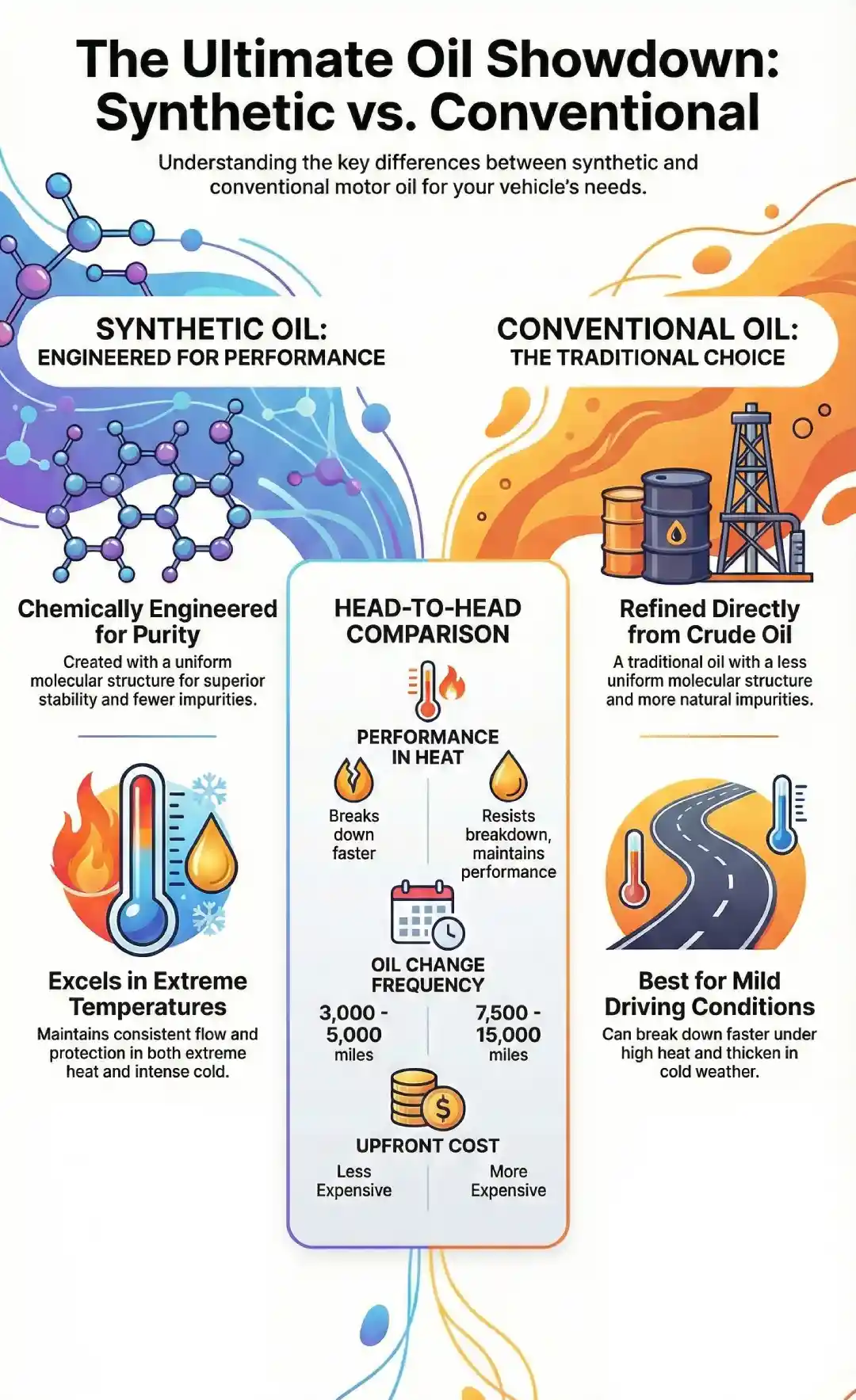
The main differences between synthetic oil and conventional oil lie in their composition, performance, and maintenance needs. Here’s a comparison of the key features:
| Feature | Conventional Oil | Synthetic Oil |
| Base Oil | Refined crude oil | Chemically engineered |
| Molecular Structure | Uneven, varying sizes | Uniform, consistent structure |
| Performance in Extreme Heat | Breaks down faster, loses viscosity | Maintains performance in high temperatures |
| Cold Weather Performance | Thickens in cold weather | Flows easily, better for cold starts |
| Oil Change Frequency | Every 3,000 to 5,000 miles | Every 7,500 to 15,000 miles |
| Cost | Less expensive | More expensive upfront |
While synthetic oil offers a more stable, consistent performance, conventional oil remains a practical and budget-friendly option for many drivers, especially those with older or low-performance cars.
Why Choose Synthetic Oil?
The Benefits of Synthetic Oil
There are several reasons why synthetic oil might be the better choice for your vehicle. From enhanced performance to better engine protection, here’s a breakdown of why many car owners opt for synthetic oils.
Longer Oil Change Intervals
One of the main advantages of synthetic oil is its longer lifespan. Because of its superior stability, synthetic oil can last between 7,500 and 15,000 miles between oil changes, depending on your vehicle and driving conditions. Conventional oil, on the other hand, typically needs to be changed every 3,000 to 5,000 miles.
This means fewer trips to the mechanic and less frequent oil changes, saving you both time and money in the long run.
Better Engine Protection
Synthetic oils offer better protection against engine wear due to their enhanced lubricating properties. The uniform molecular structure of synthetic oil helps to reduce friction between the engine’s moving parts, leading to less wear and tear. This is especially important for high-performance or newer engines that require more precise lubrication.
Synthetic oil also provides better protection at high temperatures, ensuring that the oil doesn’t break down as quickly under extreme heat. Superior lubrication prevents friction damage, helping you avoid the need for major engine repairs and diagnostics that can arise from using degraded oil. This is particularly beneficial for drivers in hot climates or those who drive aggressively or for long distances.
Enhanced Fuel Efficiency
By providing better lubrication, synthetic oil reduces friction, which can help improve fuel efficiency. The smoother engine performance allows the engine to work more efficiently, leading to a slight increase in gas mileage. If you’re looking to save on fuel, switching to synthetic oil might offer some noticeable benefits.
Improved Cold Start Performance
Synthetic oils also excel in cold temperatures. Due to their lower viscosity, synthetic oils flow more easily at colder temperatures, making it easier for your engine to start in cold weather. This ensures better protection during winter months when conventional oil might struggle to circulate properly.
Is Synthetic Oil Worth the Cost?
While synthetic oil is generally more expensive than conventional oil, the benefits it provides can justify the price for many drivers. The longer oil change intervals, better engine protection, and improved performance mean you might spend more initially but save money in the long run.
If you drive a newer car, a high-performance vehicle, or often operate your vehicle in extreme conditions (towing, off-roading, hot or cold climates), synthetic oil might be the better choice.
At Torrance Motors, we can help you decide if synthetic oil is the best option for your car. Our team is experienced in advising customers on the best oil for their vehicle and driving habits.
Common Questions and Misconceptions About Synthetic and Conventional Oil
Which Is Better, Synthetic or Conventional Oil?
The answer depends on several factors, including the age of your car, the driving conditions, and your maintenance preferences. If your car is newer or if you drive in harsh conditions, synthetic oil is likely the better option. It provides better protection and performance, especially under extreme heat or cold.
For older cars or vehicles that don’t face heavy use, conventional oil may be sufficient, and it’s more budget-friendly. However, the choice is ultimately up to the specific needs of your car and how much performance you require.
Can You Switch Between Synthetic and Conventional Oil?
It is completely safe to switch between synthetic and conventional oils. In fact, many drivers alternate between synthetic and conventional oils depending on their needs and circumstances. However, it’s important to ensure that you fully drain the old oil before switching to a different type to avoid mixing the two.
If you’re making the switch, make sure to check your vehicle’s manual for any recommendations or requirements for oil types.
Can You Mix Synthetic and Conventional Oil?
While it’s technically possible to mix synthetic and conventional oils, it’s not recommended. Mixing the two can reduce the benefits of the synthetic oil, particularly in terms of performance and longevity. If you’re using synthetic oil, it’s best to continue using it for every oil change to maintain consistent performance.
Should I Change to Synthetic Oil?
If you have a newer vehicle, a high-performance car, or you often drive in extreme conditions, switching to synthetic oil could provide significant benefits in terms of engine protection and performance. If you drive an older car or one with low-mileage, conventional oil may still be a cost-effective option, but synthetic oil could still be beneficial if you want the added protection.
Common Misconceptions About Synthetic and Conventional Oil
Myth #1: Car Diagnostic Tests Are Only for the Engine
One of the biggest myths surrounding synthetic oils is that they are only necessary for high-performance or new cars. While it’s true that synthetic oil is beneficial for modern vehicles, it also provides advantages for older cars or vehicles used in extreme driving conditions. Its superior protection against breakdowns and its ability to perform better under extreme heat or cold make it an excellent choice for all vehicle types, especially in areas like Torrance, where extreme weather can occur.
Myth #2: Diagnostic Tests Are Always Accurate
Another myth is that synthetic oil is only needed for cars with advanced technology or those that require regular maintenance. The truth is, synthetic oil can be a game-changer for any vehicle, especially if you want to extend your oil change intervals and reduce engine wear.
Myth #3: Diagnostic Tests Can Fix Car Problems
The myth that synthetic oil is too expensive for everyday drivers isn’t entirely true. While it does cost more than conventional oil, the longer oil change intervals and better engine protection it provides ultimately save money by preventing costly repairs and breakdowns. Plus, the improved fuel efficiency and performance benefits make it a smart investment.
Final Verdict
In the debate between synthetic oil and conventional oil, there is no one-size-fits-all answer. Synthetic oil offers better performance, longer-lasting protection, and is ideal for modern or high-performance vehicles. On the other hand, conventional oil is more affordable and may work fine for older cars or vehicles that aren’t subjected to heavy driving conditions.
At Torrance Motors, we can help you choose the right oil for your car. Whether you prefer synthetic or conventional oil, we offer expert advice and professional services to ensure your car runs smoothly and efficiently. If you’re unsure which oil is right for your vehicle, come visit us and let us help you make an informed decision.