
How to Fix a Car Battery And When You Should Let a Professional Handle It
When you experience issues with your car battery, it can be frustrating, especially if you’re unsure whether it’s a minor fix or something that requires professional attention. If your car battery is dead, or if you’re noticing other signs of trouble, you may be wondering, “How can I fix my car battery?” In this blog, we’ll explore the various methods you can try to fix your car battery, as well as when it’s best to let a professional handle the situation to avoid further complications.
At Torrance Motors, we specialize in car battery repair and replacement. Our expert technicians are here to guide you on maintaining your battery and ensuring it operates efficiently for the long run. So, let’s dive in and understand what steps you can take to fix your car battery when it shows signs of trouble.
Common Car Battery Problems You Should Know
Before jumping into fixing your car battery, it’s essential to understand the common problems that may be causing issues with your battery. Recognizing these problems early can help you decide whether to perform a quick fix or call in the professionals.
1. Battery Terminal Corrosion Causing Starting Issues
Corrosion on the battery terminals is one of the most common issues car owners face. When battery acid reacts with the metal terminals, it creates a white, powdery residue that can obstruct the flow of electricity. This corrosion can result in weak or intermittent electrical connections, making it difficult for your car to start.
Regularly cleaning your battery terminals can help maintain proper electrical flow, but if the corrosion is extensive or recurring, it may indicate the battery needs replacement.
2. Dead or Drained Car Battery Symptoms
If your car won’t start, or it takes a few attempts to turn over, your battery might be dead or drained. Car batteries typically last between 3 to 5 years, and as they age, their ability to hold a charge diminishes. If the battery is drained, it may be due to prolonged use or an issue with your alternator or charging system.
If the battery has completely died, you may be able to revive it with methods such as jumpstarting or recharging, but in some cases it may be beyond repair and require replacement.
3. Faulty Alternator or Charging System Problems
Sometimes, the problem isn’t the battery itself, but rather the charging system or alternator. If your alternator fails, it won’t charge the battery properly, leaving you with a car that struggles to start. If your battery keeps draining despite being jump-started or replaced, the issue may be with the alternator, requiring professional diagnostics and repair.
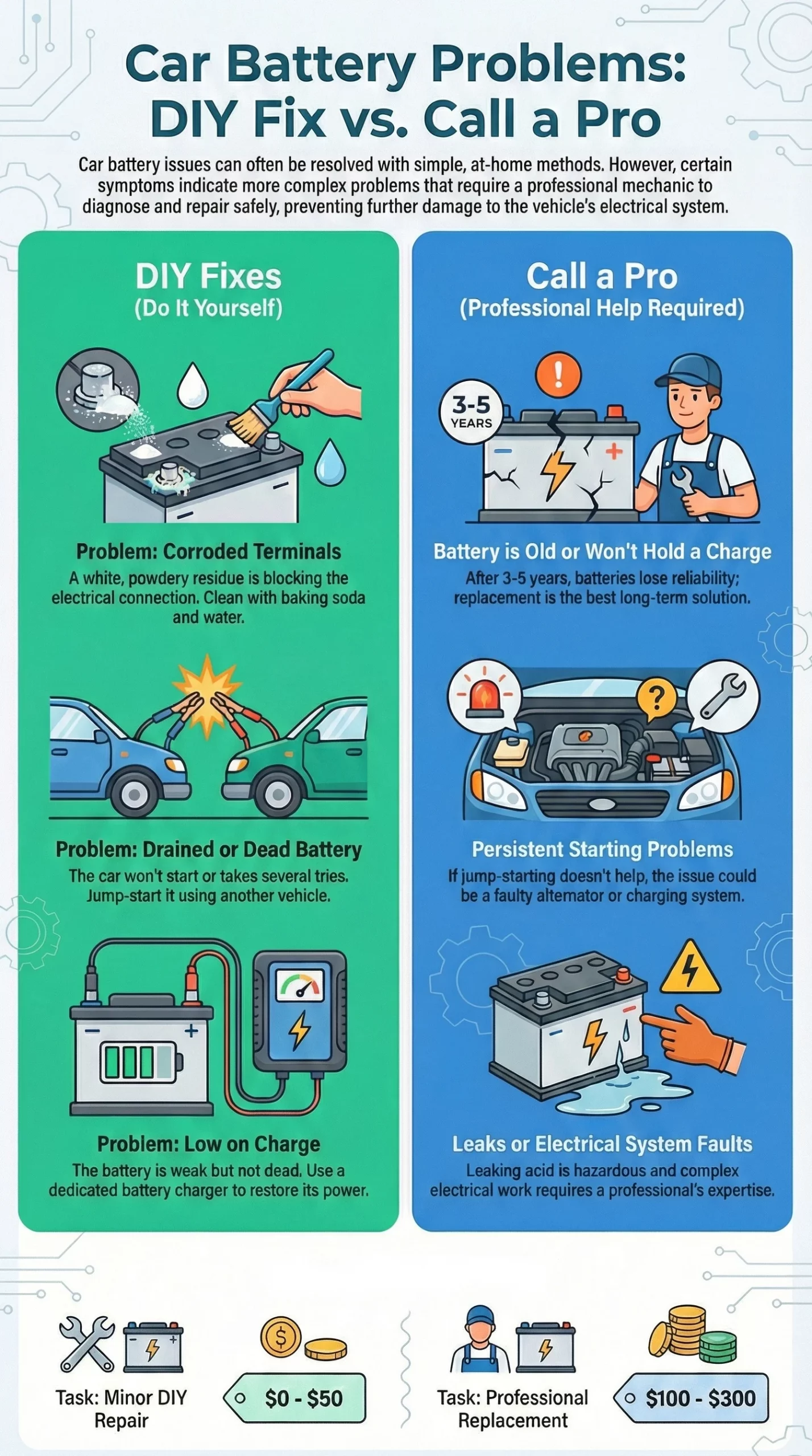
How to Fix a Car Battery Yourself (DIY Methods)
If you’re dealing with a drained or slightly damaged battery, there are a few DIY fixes you can try before turning to a professional. While these methods can temporarily restore your car’s battery performance, keep in mind that the problem may sometimes require a more permanent solution, such as replacing the battery or addressing underlying issues.
1. Clean Corroded Battery Terminals Safely
If corrosion is present on the battery terminals, it can cause poor electrical connections and prevent your car from starting correctly. To clean the terminals, you’ll need to disconnect the battery first for safety. Then, mix a solution of baking soda and water and apply it to the corroded areas. Use a wire brush to scrub away the corrosion, then rinse it with clean water.
Cleaning the terminals removes corrosion buildup, restoring a clean connection for the battery cables, improving electrical conductivity and allowing the car to start more reliably. If you notice your car struggling to start or visible corrosion on the terminals, cleaning them is the first step.
2. Jump-Start a Dead Car Battery Correctly
If your battery is dead, you can jump-start it with jumper cables and another vehicle with a fully charged battery. First, connect the positive terminal (+) of the dead battery to the positive terminal of the charged battery, and the negative terminal (-) of the charged battery to a metal surface of the dead car (not the battery itself). Start the working car and let it run for a few minutes, then try starting the vehicle with the dead battery.
Jumpstarting allows the electrical current from a charged battery to temporarily power a dead battery, providing enough charge for the car to start. Once the vehicle starts, the alternator should take over and recharge the battery. Jumpstarting works if the battery is only temporarily drained. If your car doesn’t start after a jump, the issue could be more serious, requiring professional help.
3. Recharge a Car Battery Using a Battery Charger
If your car battery is drained but not dead, you can recharge it using a battery charger. Simply connect the charger to the battery, ensuring the positive and negative terminals are connected correctly, and let the battery charge for several hours.
A battery charger will restore power to your battery, allowing it to function correctly again. This method is ideal if the battery is not entirely dead but simply low on charge. If your battery is frequently running low, it might indicate a charging system problem. If recharging doesn’t solve the issue, you might need a professional to diagnose the underlying cause.
4. Epsom Salt Battery Repair for Weak or Sulfated Batteries
For weak batteries that are showing signs of sulfation (build-up of lead sulfate crystals inside the battery), an Epsom salt solution may provide a temporary fix. Dissolve Epsom salt in distilled water and pour the solution into the battery cells. Let the solution sit for a while, and then recharge the battery.
Epsom salt helps break down the sulfate crystals that form inside the battery, potentially restoring its ability to hold a charge. However, this is a temporary fix and may not work for severely damaged batteries. Use this method if your battery is older and you’ve noticed a decrease in performance. If the battery continues to fail after treatment, a replacement may be necessary.
When You Should Let a Professional Handle Car Battery Issues
While DIY methods can provide temporary fixes, certain situations require the expertise of a professional. Here’s when it’s best to seek help from a trained technician to avoid further damage to your vehicle.
1. When Car Battery Replacement Is the Best Option
If your car battery is beyond repair or is 3 to 5 years old, replacing it is the best solution. A professional mechanic can help you choose the correct battery for your car, ensuring compatibility and optimal performance. They’ll also install the new battery safely and dispose of the old one properly.
Replacing a car battery might seem simple. Still, improper installation can lead to electrical issues, and some vehicles have complex battery systems that require specialized knowledge.
2. Diagnosing Alternator and Charging System Failures
If your battery continues to drain even after a jumpstart or replacement, the problem might be with your alternator. A professional mechanic can diagnose whether the alternator is functioning properly or needs repair or replacement.
Diagnosing alternator issues requires specialized tools and knowledge. Attempting to repair it yourself could result in further damage or safety hazards.
3. Electrical System Problems That Require a Mechanic
If your car’s electrical system is malfunctioning, including issues with wiring or fuses, it’s best to leave the diagnosis and repair to a professional. Working with a car’s electrical system can be dangerous, and a mechanic will have the tools and expertise to fix the problem safely. Electrical issues can be complicated and risky. A professional will ensure that everything is fixed correctly, preventing future breakdowns or electrical fires.
How to Save Money on Car Battery Maintenance?
When it comes to maintaining your car’s battery, cost-effectiveness is key. Battery replacements and repairs can get expensive, but by performing regular maintenance and addressing issues early, you can save money in the long run. Let’s explore ways to ensure your car’s battery lasts longer, so you won’t have to pay for replacements or repairs as often.
1. Prevent Battery Corrosion With Regular Cleaning
One of the simplest and most affordable ways to maintain your car battery is to inspect and clean its terminals regularly. Corrosion can build up over time, leading to poor electrical connections and making it harder for your car to start.
Cleaning the terminals is a quick, inexpensive task that can be done with a mixture of baking soda and water. Scrub the terminals gently with a brush to remove any buildup. Doing this every few months can keep your battery working efficiently and help prevent costly repairs.
Savings: By preventing corrosion and ensuring a clean connection, you help the battery maintain a strong charge, reducing the likelihood of needing an early replacement.
2. Use a Battery Charger to Extend Battery Life
A good-quality battery charger can help you maintain your car battery’s health without constantly draining your car’s power. If your battery is low on charge, using a charger can give it a quick boost, saving you the cost of a jump-start or professional repair. Use a charger to keep your battery topped off, especially if you don’t drive your car frequently or live in an area with extreme temperatures that can drain it.
Savings: This small investment can extend your battery’s lifespan, reduce reliance on professional services, and avoid costly jump-starts and replacements.
3. Avoid Battery Drain From Electrical Accessories
Keeping electrical components such as lights, radio, or air conditioning running while the car is off can rapidly drain the battery. If you habitually leave your lights on or run the radio for too long when the vehicle is parked, the battery will eventually drain. Make a habit of checking that all electrical components are turned off when you leave the car, especially during long periods of inactivity.
Savings: By avoiding unnecessary battery drain, you won’t need frequent recharges or risk the battery dying prematurely, saving you money on replacements and jump-starts.
4. Monitor Car Battery Voltage for Early Warning Signs
A battery tester or a multimeter can help you monitor your battery’s health. By checking the voltage, you can detect early signs of failure. Most healthy car batteries should measure around 12.6 volts when the engine is off, and the voltage should increase to 13.7-14.7 volts when the engine is running. Use a tester to check your battery’s voltage every couple of months. If the voltage falls below 12.4 volts, the battery may be losing its charge or could be faulty.
Savings: Monitoring your battery’s voltage allows you to catch problems early and take action before the battery completely fails, saving you from expensive repairs or emergency replacements.
When to Seek Professional Help for Car Battery Problems
While regular car maintenance and minor repairs can prolong your car battery’s life, specific issues require professional attention. If you notice any of these warning signs, it’s time to bring your car to an expert.
1. Persistent Starting Problems After Jump-Starting
If your car continues to have trouble starting even after a successful jumpstart, the problem could be more than just a drained battery. It could be an issue with the alternator, the battery charging system, or the ignition system. These issues are beyond simple DIY fixes and should be assessed by a professional mechanic.
A mechanic can check your charging system and alternator to ensure the battery is charging adequately while you drive. Ignoring these problems could lead to a dead battery or other costly repairs down the line.
2. Car Battery Losing Charge Too Quickly
If your battery is new but keeps losing charge quickly, it might indicate a more serious issue, like a bad alternator, faulty wiring, or a problem with the battery itself. If the battery continues to drain after charging, a professional diagnosis is necessary to identify and repair the underlying issue.
A mechanic can diagnose the problem and prevent further issues. Replacing the battery without addressing the underlying cause could lead to another failure soon after.
3. Excessive Battery Corrosion or Acid Leaks
While mild corrosion can be cleaned off, excessive corrosion around the battery terminals or visible battery leakage may indicate a larger problem. Leaking battery acid can damage surrounding parts of the car and is a health hazard.
A mechanic can clean up the acid, inspect for damage, and replace the battery if necessary. Attempting to handle this yourself without the proper safety equipment can be dangerous.
4. Repeated Battery Drain Due to Alternator Failure
If your battery is consistently draining, even with proper maintenance, the alternator or charging system might be faulty. A broken alternator will not charge the battery correctly, leading to frequent dead batteries. A professional mechanic has the equipment to properly diagnose and repair the alternator and charging system. They’ll ensure that your car’s electrical systems are functioning optimally, preventing further battery issues.
Is It Worth Repairing or Replacing a Car Battery?
When it comes to car battery repair, the decision to repair or replace the battery depends on several factors. Understanding these factors can help you make an informed decision.
1. Battery Age and Expected Lifespan (3–5 Years)
Car batteries typically last between 3 to 5 years, depending on how well they are maintained and environmental factors like temperature. If your battery is older than 5 years, it’s probably time to replace it rather than attempt a repair.
Cost Considerations:
Replacing a battery can cost $100 to $300, depending on the car model and battery type, while repairs (such as cleaning or charging) may cost only $20 to $50. However, repairs are often a short-term fix and don’t address the root cause of the problem.
2. Car Battery Repair Cost vs Replacement Cost
If your battery shows signs of severe wear, such as internal corrosion or extensive sulfation, it may be more cost-effective to replace it. Repairs like cleaning the terminals or jumpstarting the battery are inexpensive. Still, they may not provide a long-lasting solution if the battery is already close to the end of its life.
Cost Considerations:
If repairs only temporarily extend the battery’s life, you may end up paying for multiple minor maintenance. Replacing the battery ensures long-term reliability and can save you money in the future.
3. Battery Performance, Reliability, and Long-Term Value
A new battery provides better performance and reliability than an older, repaired one. If you rely on your vehicle for daily use, it’s best to invest in a replacement to ensure peace of mind, knowing the battery will work reliably for several years.
Cost Considerations:
A new battery will cost more upfront, but it offers long-term reliability, which is crucial if you depend on your car daily.
Conclusion
Knowing how to fix a car battery yourself can save time and money, but it’s important to recognize when a problem is beyond your ability to repair. Simple tasks like cleaning terminals or jumpstarting a dead battery can be done at home. Still, for more serious issues like a failing alternator or sulfation, it’s best to call a professional.
At Torrance Motors, we offer expert car battery services, including diagnostics, replacements, and repairs. If you’re experiencing battery issues, our skilled technicians are here to help. Contact us today to schedule your car battery service and ensure your car is running smoothly for years to come.
Frequently Asked Questions About Car Battery Repair and Replacement
1. How do I know if my car battery needs a tune-up or replacement?
If your car is having trouble starting, showing signs of slow acceleration, or the battery is more than 3 to 5 years old, it may need a tune-up or replacement. Additionally, if your car’s battery is draining quickly or showing corrosion on the terminals, these are signs it may be time for a replacement.
2. Can I fix a dead car battery myself?
Yes, you can attempt to fix a dead car battery by jump-starting it with another car or charging it with a battery charger. However, if your battery is old or repeatedly losing charge, replace it rather than trying to fix it yourself.
3. How much does it cost to fix a car battery?
The cost to fix a car battery depends on the issue. Jumpstarting or cleaning terminals can be done at little to no cost, but if you need a replacement battery, it can cost anywhere from $100 to $300, depending on the car model and battery type. Professional diagnostics or repairs may add to the cost.
4. When should I replace my car battery?
Typically, a car battery should be replaced every 3 to 5 years. Suppose you notice signs such as difficulty starting the car, frequent electrical issues, or the check engine light turning on. In that case, it’s a good idea to have your battery inspected and possibly replaced.
5. What happens if I don’t replace a bad car battery?
If you don’t replace a bad battery, your car may face frequent starting problems, electrical failures, or even be unable to start entirely. Ignoring battery issues can also put additional strain on the alternator and other parts of your car’s electrical system, potentially leading to more costly repairs in the future.