

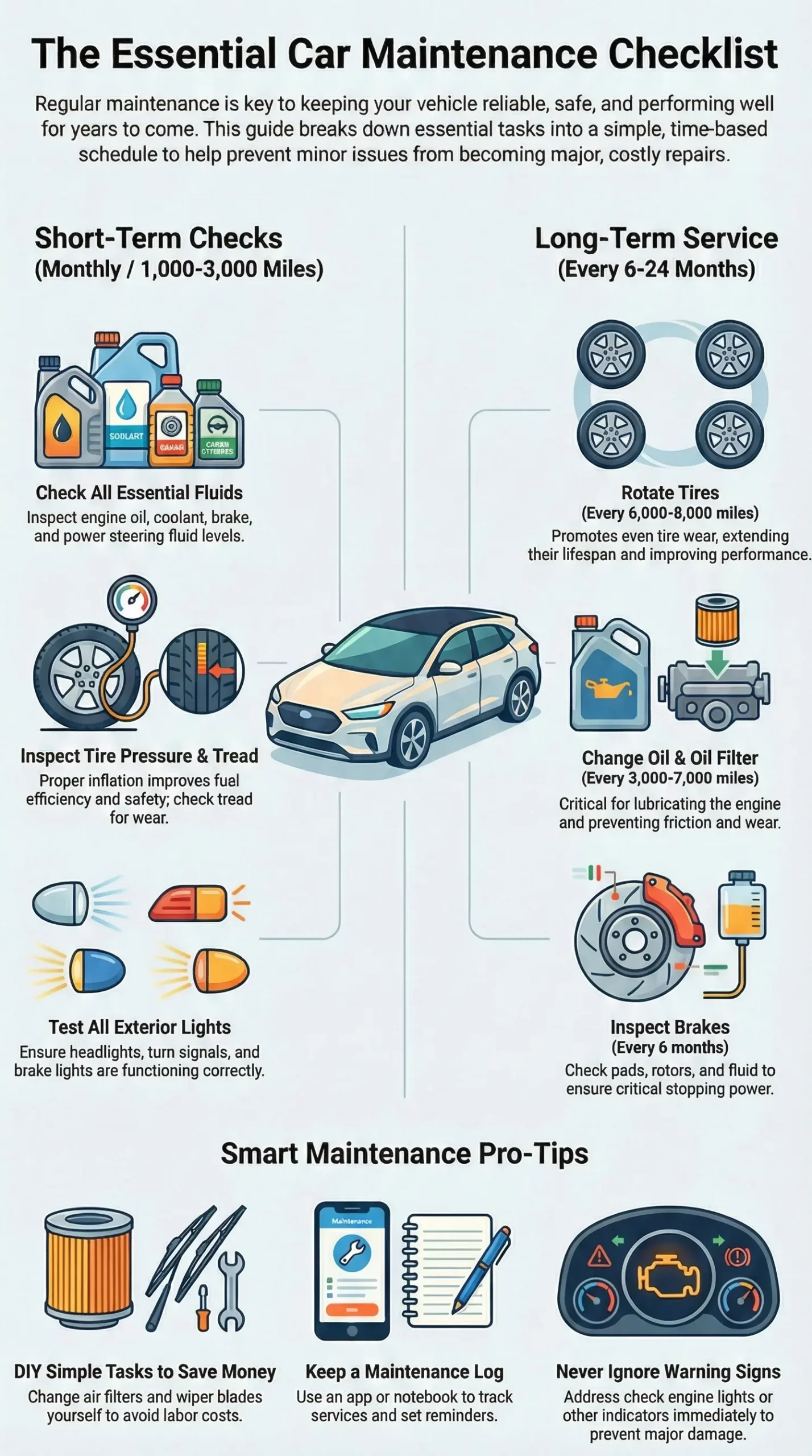
Owning a car means taking on the responsibility of keeping it in good working condition. Regular maintenance is key to keeping your vehicle reliable, performing well, and lasting for many years. But how do you keep track of all the maintenance tasks your car needs? This is where a complete car maintenance checklist comes in. A structured maintenance schedule helps you stay on top of essential tasks, ensuring nothing is overlooked in your vehicle’s care. In this blog, we will walk you through an all-inclusive car maintenance checklist covering tasks to be completed daily, monthly, annually, and as needed. This guide is not just for car owners but also for anyone looking to stay ahead of repairs and extend their vehicle’s longevity.
Short-Term Car Maintenance Tasks (Monthly or Every 1,000-3,000 Miles)
A regular car care checklist helps you maintain your vehicle at the proper intervals. Properly timed maintenance helps catch minor issues before they become major, costly repairs. Below is a breakdown of essential tasks, categorized by frequency.
1. Check Car Fluid Levels (Engine Oil, Coolant, Brake & Power Steering)
One of the most important aspects of car maintenance is checking fluid levels. Fluids such as oil, coolant, brake fluid, and power steering fluid play a crucial role in the proper functioning of the engine, cooling system, and braking system. Running low on any of these fluids can lead to overheating, engine failure, or safety issues.
Checking your car’s fluid levels is simple and essential for maintaining performance. Use the dipstick to check oil levels, and inspect coolant and brake fluid reservoirs to ensure fluids are between the “min” and “max” marks. Perform these checks monthly or every 1,000 to 3,000 miles based on your driving habits.
2. Check Tire Pressure and Tread Depth (Safety + Fuel Efficiency)
Proper tyre pressure is vital for safe driving and fuel efficiency. Underinflated or unevenly worn tyres can affect braking, handling, and overall vehicle stability. Additionally, maintaining the correct tread depth is essential for traction, especially in wet or icy conditions.
To check your tyre pressure, use a tyre pressure gauge by removing the valve cap and pressing the gauge firmly onto the valve stem to get a reading. For tyre tread, perform the “penny test” by inserting a penny into the tread; if you can see Lincoln’s head, it’s time to replace the tires. Check tire pressure monthly and tread depth every six months for optimal safety and performance.
3. Inspect Car Lights (Headlights, Brake Lights, Turn Signals)rking Lights)
Visibility is essential for driving safely, and functioning lights are a crucial part of that. Regularly check your car’s headlights, brake lights, turn signals, and parking lights to ensure they’re all working correctly.
To check your car’s lights, have someone assist you by standing outside to verify if the headlights, turn signals, and brake lights are working correctly. Alternatively, use a reflective surface like a garage door or wall to see if the lights illuminate and signal correctly without help.
4. Engine Air Filter Check and Replacement Schedule
The air filter helps ensure that clean air enters the engine, optimizing fuel efficiency and engine performance. A clogged air filter can lead to reduced power, poor fuel efficiency, and potential engine damage.
To check your car’s air filter, remove it and inspect for dirt or debris; if it appears clogged or visibly dirty, it’s time to replace it. This should be done every 3,000 to 5,000 miles or as specified by your vehicle’s manufacturer to maintain optimal engine performance.
5. Wiper Blade Inspection and Windshield Washer Fluid Top-Up
Wiper blades are essential for maintaining clear visibility during rain, snow, or fog. If your wiper blades are worn out or ineffective, you risk compromising your safety. Check your windshield wiper blades monthly for signs of wear, such as cracking, streaking, or uneven wiping. Also, ensure your windshield washer fluid is topped off. Replace the blades every six months or sooner if you notice reduced performance to maintain clear visibility and safe driving.
Long-Term Car Maintenance Schedule (Every 6 Months to 2 Years)
These are more in-depth tasks that ensure your car runs efficiently and withstands the wear and tear of long-term use.
1. Tire Rotation Schedule (Every 6,000–8,000 Miles)
Tire rotation helps ensure even tyre wear, extending the lifespan of your tyres and improving overall vehicle performance. This simple task prevents uneven tyre wear that can lead to tire failure or premature replacement.
A professional mechanic typically performs tyre rotation during regular service. It involves moving tyres from one position to another, such as shifting front tires to the rear and vice versa, to promote even tyre wear. This service is recommended every 6,000 to 8,000 miles or as advised by the vehicle manufacturer.
2. Oil Change and Oil Filter Replacement Interval (3,000–7,000 Miles)
Regular oil changes are critical to maintaining engine health. Oil lubricates the engine’s moving parts, preventing friction and wear. Over time, oil degrades, which is why it needs to be changed regularly for optimal engine performance.
- How to Perform: Drain the old oil, replace the oil filter, and fill with fresh oil.
- Frequency: Every 3,000–7,000 miles, depending on driving habits and oil type.
3. Brake Inspection Checklist (Pads, Rotors & Brake Fluid)
The brake system is one of the most critical components of your car. Worn-out brake pads or low brake fluid can lead to reduced stopping power and, in the worst case, brake failure.
- How to Perform: Check the brake pads for thickness, inspect the rotors for signs of wear, and check the brake fluid level.
- Frequency: Every 6 months or 12,000 miles.
4. Cabin Air Filter vs Engine Air Filter Replacement Schedule
Air filters ensure that the engine runs efficiently and the air inside the cabin remains clean. A clogged cabin air filter can lead to poor air quality, while a clogged engine air filter can reduce engine efficiency.
- How to Perform: Remove the old filter and replace it with a new one.
- Frequency: Every 12,000–15,000 miles for the engine air filter and 12,000–30,000 miles for the cabin air filter.
5. Spark Plug Inspection and Replacement Mileage
Spark plugs play an essential role in your car’s engine by igniting the air/fuel mixture. Worn-out spark plugs can cause misfires, poor fuel economy, and engine damage.
- How to Perform: A mechanic will inspect the spark plugs and replace them if they are damaged or worn.
- Frequency: Every 30,000 miles or as specified in your vehicle’s manual.
Seasonal Car Maintenance Checklist (Twice a Year)
In addition to regular maintenance, it’s essential to prepare your car for the changing seasons. Different weather conditions can affect how your car performs, so it’s a good idea to check a few key components before the seasons change.
1. Battery Health Check Before Summer and Winter
Extreme temperatures, whether hot or cold, can affect your car’s battery life. Checking the battery before winter and summer helps prevent issues like a dead battery when you need it most.
- How to Check: Test the battery voltage with a multimeter, or have a professional mechanic check its condition.
- Frequency: Twice a year (before summer and winter).
2. Windshield Wiper Replacement for Rainy Season and Winter
Wipers are crucial for driving in rainy or snowy weather. They tend to wear out, especially in harsh weather conditions. Replacing them before the rainy season or winter ensures optimal performance.
- How to Check: Inspect the rubber blades for any cracking or tears. Replace them if necessary.
- Frequency: Every season, especially before winter.
3. Tire Condition Check for Seasonal Driving (Pressure, Tread, Damage)
Tires are the only point of contact between your car and the road, so ensuring they are in good condition is critical to safety. Before the winter months, you should check tire tread, pressure, and condition to prepare for slippery roads.
- How to Check: Inspect tire pressure, tread depth, and look for any punctures or damage.
- Frequency: Every 6 months.
How to Track Your Car Maintenance Schedule (Never Miss a Service)
Staying on top of your car’s maintenance schedule can sometimes feel overwhelming, but it’s essential to ensuring your vehicle continues to run efficiently and remains reliable for years. Here’s how to make the process easier and ensure that you never miss a necessary task.
Build a Custom Maintenance Schedule Using Your Owner’s Manual
Every car has its own specific maintenance needs based on factors like make, model, and driving conditions. Building a custom maintenance schedule tailored to your vehicle is an excellent way to stay organised.
- Refer to the Owner’s Manual: Your car’s owner manual should include a recommended schedule for routine maintenance tasks, such as oil changes, tyre rotations, and fluid checks. Be sure to follow these guidelines.
- Personalized Reminders: Keep track of when each maintenance task is due. This can be done manually with a paper log or digitally through a maintenance tracking app or a simple Google Calendar reminder system. Tools like the Car Maintenance Tracker app can help you keep detailed records of each service performed and send reminders for upcoming services.
By setting reminders and scheduling regular maintenance, you can ensure that you’re always up to date with your car’s needs. This method can also help prevent minor issues from escalating into larger, more expensive repairs.
Set Maintenance Reminders (Oil Changes, Tire Rotations, Fluid Checks)
The key to staying on top of maintenance is never to forget essential tasks. Some of these include oil changes, tyre rotations, and brake inspections. A simple strategy is to set recurring reminders on your phone or in your calendar for these tasks. Here’s how you can break it down:
- Oil Changes: Set a reminder every 3,000-7,000 miles, depending on your car’s needs.
- Tire Rotations: Set reminders for every 6,000 miles or when needed.
- Fluid Checks: Set reminders to check fluids like coolant, brake fluid, and power steering fluid at least once every 1,000 miles or monthly.
Keep a Car Maintenance Log (Paper or Digital Service History)
Maintaining a maintenance log is an excellent way to track the services performed on your car. This log will keep track of everything from oil changes to brake replacements. Here’s how to maintain one:
- Physical Log: Write down every maintenance task in a notebook or binder. Include the date, service performed, and cost.
- Digital Log: Use apps like Google Sheets or Excel to track your car’s maintenance. Create columns for the task, mileage, date, and service provider, and keep everything organized and easily accessible.
If you want to avoid keeping a log yourself, Torrance Motors can help you maintain a service history by handling your routine maintenance and repairs.
How to Save Money on Car Maintenance Without Cutting Corners
Maintaining your car doesn’t have to drain your wallet. Here are some smart tips to help you reduce maintenance costs without sacrificing quality or safety.
DIY Car Maintenance Tasks That Save Money
Performing basic maintenance yourself is one of the best ways to save money. Specific tasks don’t require professional tools or expertise, and they can be done at home with minimal cost. Some DIY tasks you can consider include:
- Changing the Air Filter: Replacing a dirty air filter is an easy task that takes just a few minutes. A new air filter usually costs between $20–$50, but if you do it yourself, you can save on labor fees.
- Replacing Windshield Wipers: Wipers wear out over time, and replacing them is a quick and inexpensive task. You can typically find replacement wipers for $10–$30. Doing this yourself ensures good visibility during rainy conditions and helps you avoid more costly repairs.
- Checking Tire Pressure: Keeping your tire pressure at the correct level can improve your car’s fuel efficiency and prevent uneven tire wear. A tire pressure gauge costs only a few dollars, and it’s easy to check the pressure yourself.
By handling these simple tasks, you can save money on labor costs and help extend the life of your car.
Preventive Car Maintenance Tips to Avoid Costly Repairs
One of the most effective ways to save money is to focus on preventive care. Addressing small issues before they become larger, more expensive problems can save you a lot in the long run.
For example, regularly checking fluid levels, maintaining your tires, and replacing the air filter when needed can prevent engine damage, poor fuel efficiency, and expensive repairs down the road.
- Regular Oil Changes: Keeping your engine well-lubricated with regular oil changes helps it run efficiently. This can prevent major engine issues that would cost thousands of dollars to fix.
- Tire Maintenance: Properly inflated tires, routine rotations, and tread checks can help you avoid premature tire replacements and improve your car’s gas mileage.
Choosing a Reliable Mechanic for Routine Service and Repairs
While performing some maintenance tasks yourself can save money, it’s still essential to have a trusted professional handle more complex tasks. A reliable mechanic, such as the experts at Torrance Motors, can help you maintain your car in top condition, perform essential repairs, and prevent costly mistakes.
When choosing a mechanic, look for a shop with a good reputation, fair pricing, and certified technicians. Regular check-ups at a reliable shop can prevent serious problems and ensure your car runs safely.
Common Car Maintenance Mistakes to Avoid
When maintaining your car, it’s essential to be aware of common mistakes that can lead to costly repairs or unsafe driving conditions. Here are some mistakes to avoid:
Skipping Regular Car Service and Check-Ups
One of the most common mistakes car owners make is neglecting regular maintenance tasks. Skipping oil changes or ignoring tyre rotations can lead to bigger problems, such as engine failure or excessive tyre wear. Following a car daily maintenance checklist helps ensure that you stay on track and avoid these issues.
Ignoring Minor Repairs That Become Major Problems
Minor repairs, such as fixing a small brake issue or replacing a cracked air filter, may seem insignificant, but they can turn into much larger problems if neglected. Always address minor issues as soon as you notice them to avoid costly repairs down the line.
Warning Lights and Signs You Should Never Ignore
Your car is equipped with indicators and warning lights for a reason. Ignoring these signs, like the check engine light or low oil light, can lead to major engine or transmission issues. If you notice anything unusual, have your car checked by a professional mechanic immediately.
Conclusion
A complete car maintenance checklist is your roadmap to ensuring that your vehicle runs smoothly, stays reliable, and serves you well for many years. By following this checklist and staying on top of routine and seasonal maintenance, you can avoid costly repairs, enhance your car’s performance, and improve its longevity.
Whether you choose to handle basic tasks yourself or rely on professional services, such as those offered at Torrance Motors, regular maintenance is essential. Don’t wait until something goes wrong, start following your annual car maintenance checklist today to keep your car in optimal condition.Ready to give your car the attention it deserves? Book an appointment for your next maintenance check-up.
