
How Long Does It Take to Change a Car Battery?
Changing a car battery seems like a simple task, but it can be tricky if you’re not familiar with the process. Whether you’re tackling this job yourself or planning to take your car to a professional mechanic, it’s essential to know how long it typically takes, what factors can influence the time, and how to get the job done safely and effectively. In this guide, we will tell you everything you need to know, from how long it takes to change a battery to how to ensure your car battery lasts as long as possible.
What Affects Car Battery Replacement Time?
Before diving into how long it takes to change a car battery, let’s first explore the factors that can influence this time.
1.Car Model & Battery Type (Standard vs AGM vs Hybrid/Stop-Start)
Not all car batteries are created equal. Some cars have more accessible batteries, while others may require more time and effort to remove and replace. Additionally, specific car models may use different battery types, which can affect installation time. For example, some modern vehicles with stop-start systems or hybrid cars may have more advanced battery systems that require additional steps during replacement.
- Standard batteries typically take about 30 to 45 minutes to replace.
- AGM (Absorbent Glass Mat) batteries may require a slightly longer installation time due to their more complex design.
2. DIY vs Mechanic Skill Level (Beginner vs Professional)
The time it takes to replace a battery also depends on who is doing the work. If you’re replacing the battery yourself, the process may take longer than if a professional mechanic is handling it. Experienced mechanics can typically replace a car battery quickly and efficiently, saving you time and hassle.
- DIY (Do-It-Yourself) replacements can take up to an hour, especially for beginners.
- Professional Service is faster, usually within 30 minutes, thanks to the right tools and expertise.
3. Tools Needed for Car Battery Replacement (Basic vs Advanced Tools)
Having the right tools can significantly reduce the time needed to replace a battery. A mechanic will likely use specialized tools like a terminal puller or impact wrench, which help speed up the job. If you’re working with basic household tools, expect to spend a little extra time. Basic tools include a wrench, gloves, and safety goggles. Advanced tools can consist of a battery terminal puller, a torque wrench, or an impact driver, all of which help make the job faster and easier.
4. Battery Location in the Vehicle (Engine Bay, Trunk, Under Seat)
In most cars, the battery is easily accessible, but in some vehicles it may be tucked away in hard-to-reach spots, such as under the seat, in the trunk, or beneath other engine components. If the battery is in an inconvenient location, it may take longer to remove and replace.
Average Time to Replace a Car Battery
When it comes to replacing a car battery, the time required can vary depending on several factors. On average, a professional mechanic can replace a car battery in about 30 to 60 minutes. This time includes disconnecting the old battery, removing it from the vehicle, installing the new battery, and ensuring all connections are properly tightened to prevent electrical issues. However, the time may vary depending on several factors.
For instance, the type of battery you’re replacing can affect the time it takes. AGM (Absorbent Glass Mat) and lithium-ion batteries generally take longer to install than traditional lead-acid batteries due to their more complex design. Additionally, your car model affects the time required for replacement. Some vehicles may have a battery in a hard-to-reach area, requiring additional time to access. In some cases, if the vehicle needs special reprogramming or adjustments, the process may take longer.
How to Replace a Car Battery Step by Step?
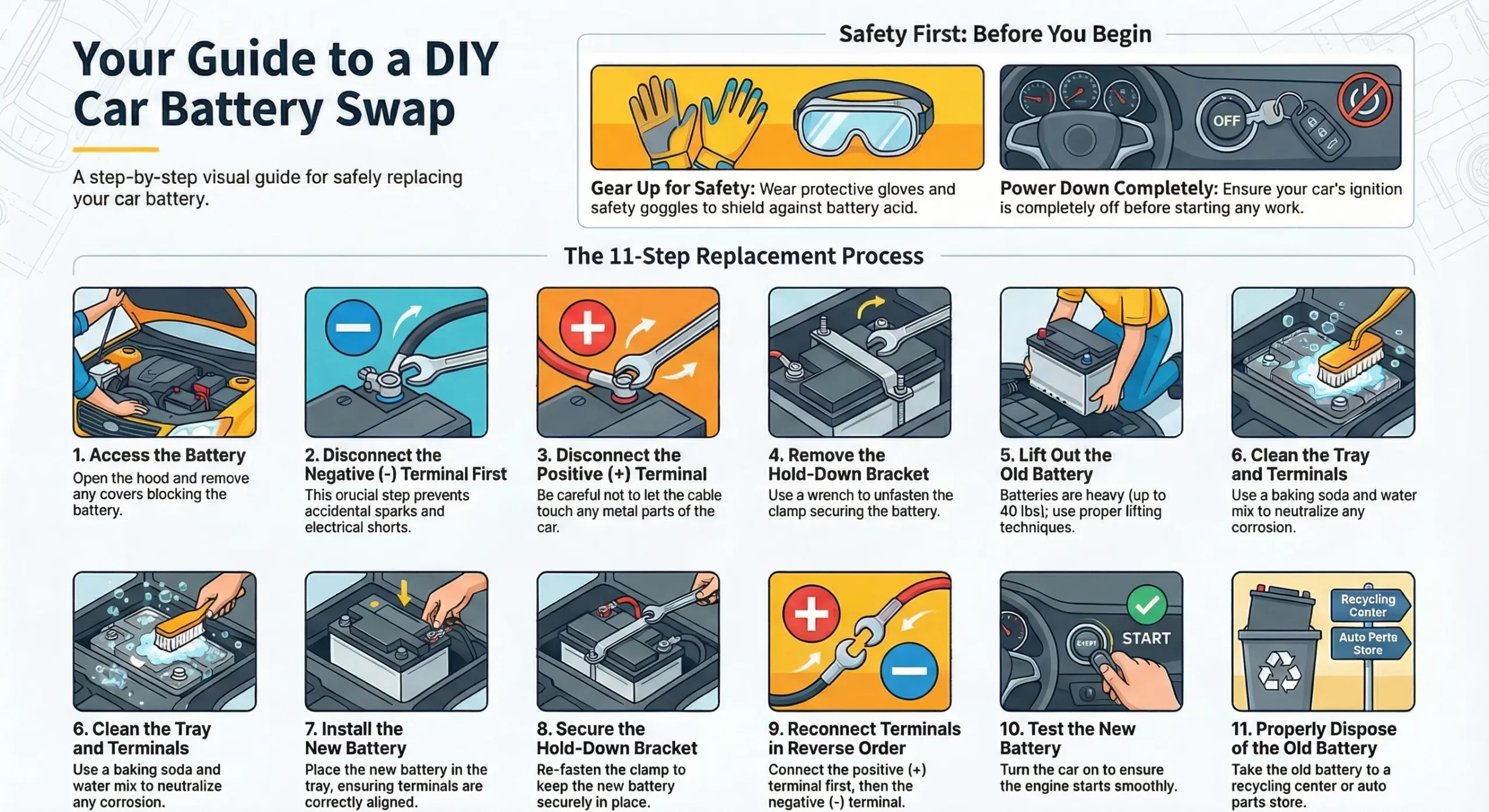
Replacing a car battery is a manageable task for those with basic tools and know-how. However, it’s essential to take your time and follow the steps properly. Here’s a detailed step-by-step guide to help you through the process.
Car Battery Replacement Safety Tips (Gloves, Goggles, Precautions)
Before starting any work, it’s essential to wear the proper safety gear. Gloves will protect your hands from acid leaks and corrosion, while goggles will shield your eyes from potential splashes of battery acid. Safety should always come first.
Step 1: Turn Off the Car & Access the Battery
Ensure your car is completely off before beginning the replacement process. Open the hood to access the battery. For some vehicles, you may need to remove a cover or plastic panel that’s blocking the battery.
Step 2: Disconnect the Negative Terminal First
Start by loosening the nut on the negative terminal (marked with a minus sign). This prevents any accidental sparks. Remove the cable from the terminal and move it aside. This step is crucial for safety, as it minimizes the risk of electrical shorts.
Step 3: Disconnect the Positive Terminal
Next, loosen and remove the cable from the positive terminal (marked with a plus sign). Be careful not to let the positive cable come into contact with any metal parts of the car.
Step 4: Remove the Battery Hold-Down Bracket or Clamp
Most car batteries are secured in place by a clamp or bracket. Use the appropriate tools to remove the hold-down mechanism. Be sure to keep the hardware safe in case you need it for the new battery.
Step 5: Lift Out the Old Battery
Now it’s time to remove the old battery. Be cautious, as car batteries can be heavy (up to 40 pounds). Use proper lifting techniques to avoid injury.
Step 6: Clean the Battery Tray and Terminals
Before installing the new battery, clean the battery tray and terminals. Use a mixture of baking soda and water to neutralize any corrosion. This helps ensure a good connection and prevents future battery issues.
Step 7: Install the New Battery
Place the new battery into the tray, ensuring the terminals are on the correct sides (positive on the positive side, opposing on the negative side). Ensure that the battery is securely positioned.
Step 8: Secure the Battery with the Hold-Down Bracket
Reattach the hold-down bracket or clamp to keep the new battery in place. Tighten the bolts to secure the battery, but avoid over-tightening.
Step 9: Reconnect the Terminals in Reverse Order
Reconnect the positive terminal first, followed by the negative terminal. This order is essential to prevent any sparks when making the connection.
Step 10: Test the Battery
Turn the car on to test the new battery. If everything is working correctly, the engine should start smoothly without any issues. If you notice any problems, check the connections to ensure they are secure.
Step 11: Proper Disposal of the Old Battery
Car batteries should never be thrown away in regular trash due to their hazardous materials. Make sure to take the old battery to a recycling centre or a local auto shop that accepts used batteries. Torrance Motors also offers battery recycling services for your convenience.
Signs You Need a New Car Battery (Warning Symptoms)
While knowing how to replace a car battery is helpful, it’s equally important to recognize when it’s time to replace your battery. Understanding the signs that your car battery is nearing the end of its life can save you from sudden breakdowns and unexpected expenses. Here are some common signs that your battery might need replacing:
1. Slow Engine Cranking When Starting
When you attempt to start your car, and it takes longer than usual for the engine to crank or start, it could be a sign that your battery is weakening. If the engine cranks slowly, it’s struggling to get enough power from the battery to start.
2. Dim or Flickering Headlights
Headlights that flicker or dim while you’re driving are another common sign that your battery may not be holding a charge. If the battery can’t maintain a consistent charge, it can affect the electrical components of your vehicle, like the headlights.
3. Battery Warning Light on Dashboard
Most modern vehicles have a battery warning light on the dashboard. If this light comes on, it indicates that the battery is not performing optimally. It’s always a good idea to have your battery tested by a professional mechanic if this warning light appears.
4. Swollen or Bulging Battery Case
Extreme temperatures can cause the battery case to swell. If you notice that the battery case is bulging or deformed, it’s time to replace it. A swollen battery is a clear sign that the internal components have been damaged, and it could even lead to a dangerous leak.
5. Frequent Jumpstarts Needed
If you find yourself jump-starting your car frequently, it may be a clear indication that the battery is no longer holding a charge. A healthy battery should hold a charge long enough to start your vehicle, even after sitting idle for a few days.
If you’re experiencing any of these symptoms, don’t wait too long to get your car checked. Torrance Motors offers expert diagnostic services to help determine if your battery needs replacing.
How to Make Your Car Battery Last Longer (Battery Maintenance Tips)
Replacing a car battery can be costly, so it’s essential to take steps to extend its lifespan. While batteries typically last between three and five years, there are ways to ensure yours lasts as long as possible.
1. Regularly Drive Your Car
Batteries naturally lose charge when the car isn’t driven frequently. If your car is parked for extended periods, the battery may discharge. Even short trips around the block can help keep your battery charged.
2. Keep Your Car in a Cool Environment
Extreme temperatures—especially heat—can drain your battery faster. If you can, park your car in a shaded area or garage to keep it cool. High heat accelerates the rate at which the battery loses charge and can cause long-term damage.
3. Avoid Short Rides
Short trips where the engine doesn’t get a chance to fully warm up prevent the alternator from charging the battery. If you frequently drive short distances, your battery may not get enough charge to keep it healthy.
4. Keep Battery Terminals Clean
Corrosion around the battery terminals can prevent the battery from getting a proper connection. Regularly cleaning the terminals with a baking soda and water mixture can help maintain optimal battery performance.
5. Turn Off Accessories Before Turning Off the Engine
Leaving things like the headlights, radio, or air conditioning running while the car is off can drain the battery. Always ensure all accessories are turned off before shutting off the engine to avoid unnecessary drain on the battery.
6. Check the Battery Voltage Regularly
Regularly checking your battery’s voltage can help you identify if it’s starting to lose its charge before it becomes a bigger issue. We offer battery testing services to ensure your battery is always at its best.
How Often Should You Replace Your Car Battery?
Even with proper care and car maintenance, all batteries will eventually need to be replaced. On average, a car battery lasts 3 to 5 years, but this can vary depending on the type of battery, your driving habits, and the climate in which you live.
Battery Lifespan by Climate
- Hot climates can shorten your battery’s lifespan because higher temperatures cause the battery’s fluids to evaporate faster, accelerating the degradation of its components.
- Cold climates can also affect battery life, as cold weather slows down the chemical reactions inside the battery, making it harder for the battery to generate enough power to start the car.
Battery Lifespan by Car Type
- Standard vehicles typically have a battery lifespan of around 3 to 4 years.
- Hybrid or electric vehicles may have batteries that last longer, but they are also more expensive to replace.
If your battery is nearing the 3-year mark, it’s a good idea to have it checked to ensure it’s still functioning properly. We offer free battery checks to help you stay ahead of any potential issues.
DIY vs Professional Car Battery Replacement
When it comes to replacing your car battery, you have two main options: doing it yourself or having a professional mechanic do it. Both options come with their pros and cons.
DIY Battery Replacement
Replacing the battery yourself can be a cost-effective option if you have the right tools and some basic automotive knowledge. You can save money on labor costs, and it’s a relatively simple task if you follow the steps carefully. However, there are a few downsides:
- It takes more time, especially for beginners.
- You may not have access to the necessary equipment, such as a torque wrench, to ensure the job is done correctly.
- Mistakes, like connecting the terminals in the wrong order, can cause electrical issues.
Professional Battery Replacement
For those who prefer to leave it to the experts, professional battery replacement offers several advantages:
- Speed and Efficiency: A professional mechanic can replace the battery quickly, often in 30 minutes or less.
- Proper Tools and Expertise: Mechanics have specialized tools and the experience to handle any issues that might arise.
- Warranty: Many professional services, including Torrance Motors, offer warranties on their work, giving you peace of mind that if something goes wrong, it will be covered.
While doing the replacement yourself can save money, we provide a quick and reliable option that ensures the job is done safely and correctly, every time.
Common Car Battery Replacement Mistakes to Avoid
If you decide to replace the battery yourself, be mindful of the common mistakes that can cause problems down the line.
1. Improper Connection of Terminals
Connecting the wrong terminal first can cause sparks and electrical shorts. Always connect the positive terminal first, followed by the negative terminal.
2. Forgetting to Secure the Battery
Failing to secure the battery properly can cause movement while driving, which may damage the battery or even cause a short circuit. Always ensure the battery is securely fastened.
3. Using the Wrong Battery Size or Type
Choosing the wrong battery size or type can lead to poor performance and a shorter battery life. Be sure to check the manufacturer’s specifications to select the correct battery for your vehicle.
4. Not Recycling the Old Battery
Car batteries contain harmful chemicals, so they should never be disposed of in regular trash. Always recycle your old battery through a reputable recycling program or take it to a place where we can dispose of it safely.
How Long Does a New Car Battery Last After Installation?
Once your new battery is installed, how long will it last? Typically, a new car battery can last 3 to 5 years, depending on how well you maintain it. However, if you live in a particularly hot or cold climate, or if you don’t drive your car frequently, your battery might wear out sooner.
Conclusion
Changing a car battery is a vital part of vehicle maintenance, and understanding how long it takes, when to replace it, and how to extend its life can save you both time and money. Whether you choose to replace your car battery yourself or have a professional service do it, it’s crucial to ensure the job is done correctly for optimal performance and safety. If you’re unsure about your car’s battery or need a replacement, contact Torrance Motors for expert service you can trust.