Why Your Car Makes Noise When Accelerating: Common Causes and Solutions
When you hear a strange noise coming from your car while accelerating, it can be concerning. While some sounds might be harmless, others could signal serious mechanical issues that need immediate attention. Understanding the cause of these noises is crucial for diagnosing problems early, saving you from costly repairs and ensuring your safety on the road. In this blog, we’ll explore the common causes of acceleration noises, their potential impact on your vehicle, and the best ways to address these issues. Whether you’re dealing with squeals, rattles, or humming, we’ll guide you through what these sounds mean and how to handle them effectively.
Car Noise When Accelerating: What’s Normal vs What’s a Problem
When your car accelerates, it’s expected to produce some level of noise. However, there are specific sounds that can indicate issues within your vehicle. The key is understanding what’s normal and what’s not. For example, a slight hum from the engine or the sound of your tires gripping the road is typical. But if your car starts making loud squeals, rattles, or grinding noises, it could signal a mechanical issue that needs attention.
Types of Noises When Accelerating and What They Mean
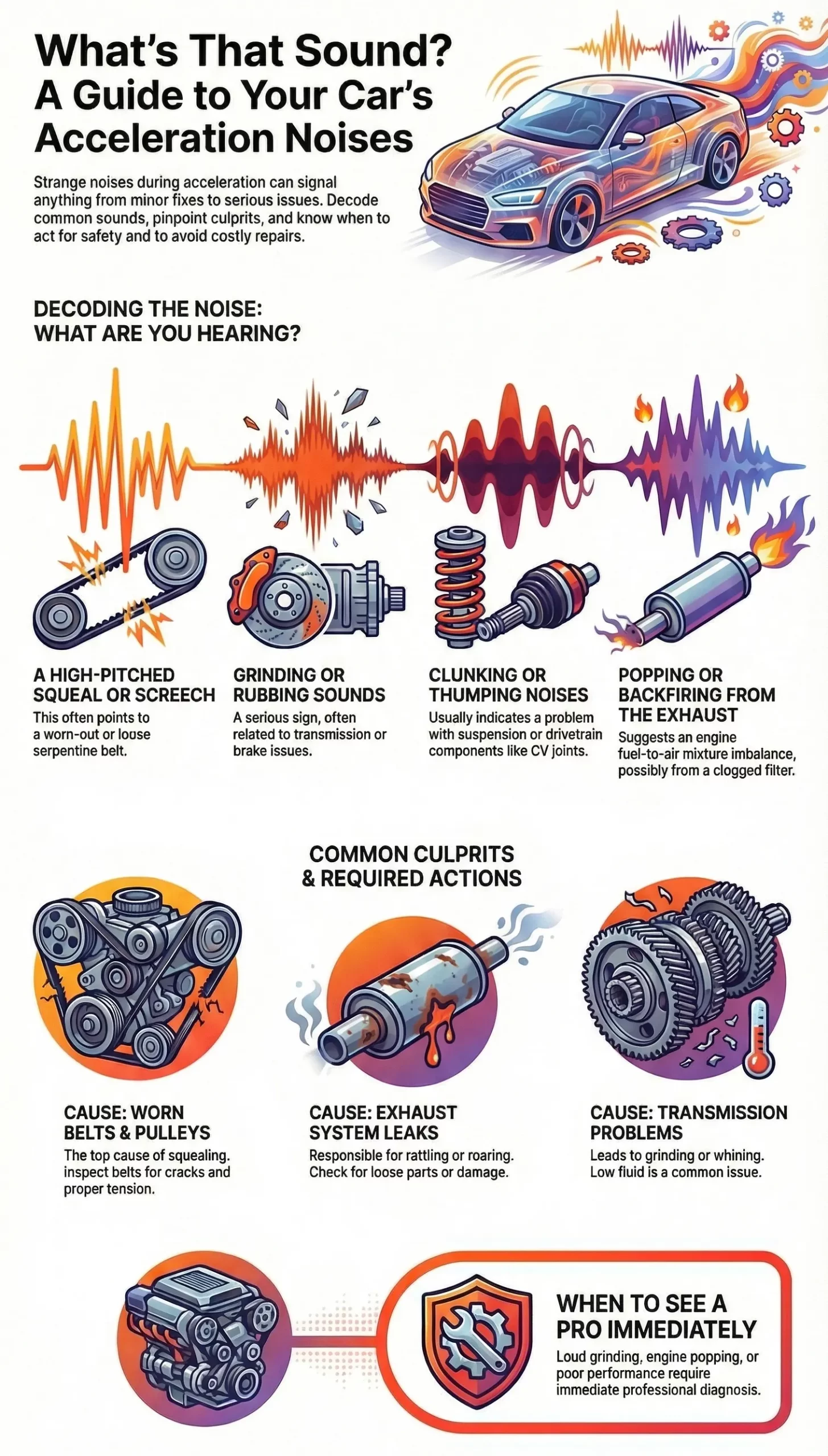
Squealing or Screeching Noise When Accelerating (Serpentine Belt)
If you hear a squealing or screeching sound when you accelerate, the most common cause is a worn-out serpentine belt. The serpentine belt powers essential components like the air conditioning, alternator, and power steering. Over time, this belt can wear out or become loose, leading to friction that produces the high-pitched sound. This issue is relatively easy to fix by replacing the belt or adjusting the tension.
Grinding Noise When Accelerating (Transmission, Brakes, Drivetrain)
A grinding or rubbing sound can be a more serious issue. Often caused by problems within the transmission, brake pads, or drivetrain components, grinding sounds typically indicate that metal parts are rubbing together, which can lead to significant damage if not addressed promptly. This type of noise is common when there’s a lack of proper lubrication in the transmission or differential. If this noise occurs, it’s best to have your vehicle inspected to prevent further damage.
Clunking or Thumping Noise on Acceleration (CV Joints, Axles, Suspension)
Clunking or thumping noises during acceleration usually indicate problems with your car’s suspension or drivetrain. Components such as CV joints, axles, or the driveshaft can become loose or damaged, causing the vehicle to make a thumping sound, especially during turns or acceleration. These components are responsible for transmitting power to the wheels, and any issues can affect your car’s handling and stability.
Popping or Backfiring When Accelerating (Fuel-Air Mixture, Spark Plugs, Injectors)
An imbalance in the fuel-to-air mixture in the engine can cause a popping or backfiring sound from your car’s exhaust. This could be due to clogged fuel injectors, a dirty air filter, or malfunctioning spark plugs. These problems can lead to unburned fuel in the exhaust system, resulting in a popping sound when the engine accelerates.
This issue should be addressed quickly, as a poor fuel mixture can significantly impact engine performance and fuel efficiency.
Rattling or Vibrating Noise When Accelerating (Loose Exhaust, Heat Shield, Muffler)
A rattling or vibrating noise, particularly when accelerating, is often due to loose parts or a malfunctioning exhaust system. The muffler, catalytic converter, or heat shields can become loose or misaligned over time, leading to vibrations and rattling. While these issues may not directly affect your car’s performance, they can lead to more severe problems if left untreated.
Common Causes of Noises When Accelerating
Exhaust System Noise When Accelerating (Leaks, Muffler, Catalytic Converter)
The exhaust system is responsible for directing exhaust gases away from the engine and reducing noise. If you’re hearing a rumbling or loud noise when you accelerate, it could be due to a leaking exhaust pipe, a damaged muffler, or a faulty catalytic converter. Any of these issues can disrupt the proper flow of exhaust gases, causing a noticeable sound.
Exhaust system problems can range from minor issues, such as loose parts, to more severe issues, such as a clogged catalytic converter. If you notice a significant change in the sound of your exhaust, it’s essential to have it checked out.
Serpentine Belt and Pulley Noise on Acceleration
The serpentine belt and pulleys power several vital systems in your car, including the alternator, power steering, and air conditioning. Over time, belts can become loose, worn, or damaged, leading to squealing or screeching noises when you accelerate. Similarly, the pulleys that guide the serpentine belt can also wear out and cause similar sounds.
Regular inspection and maintenance of your belt system are essential to prevent these types of noises.
Transmission Noise When Accelerating (Low Fluid, Worn Gears, Slipping)
Transmission issues are a common cause of grinding noises or rough shifting when accelerating. A low level of transmission fluid or worn-out transmission gears can cause metal parts to grind against each other. Slipping gears while accelerating can also produce a distinct whining sound. Transmission issues should be addressed immediately to prevent further damage and costly repairs.
Engine Knocking or Ticking When Accelerating (Bearings, Valves, Pistons)
If you hear a knocking or ticking noise when accelerating, it could be a sign of worn engine bearings, faulty valves, or damaged pistons. These components are crucial for engine performance, and any failure can significantly affect how the engine operates. Ignoring these noises can lead to severe engine damage, so it’s essential to have your engine checked if you hear them.
Drivetrain and Differential Noise When Accelerating (CV Joints, Driveshaft)
The drivetrain consists of components like axles, driveshafts, and differentials that transmit power from the engine to the wheels. If you hear a clicking or clunking noise when accelerating, it’s often due to worn-out CV joints or damaged differential components. These parts can cause the car to lose traction, leading to additional wear and tear on other drivetrain components.
Suspension Clunking Noise When Accelerating (Shocks, Struts, Bushings)
Suspension problems are another common cause of noise when accelerating. Worn-out shocks, struts, or bushings can lead to clunking noises, especially when driving over bumps or uneven surfaces. While these noises may not seem urgent, they can affect your car’s handling and safety, so it’s essential to have them repaired as soon as possible.
Wheel Bearing or Tire Noise When Accelerating (Humming, Rumble, Vibration)
Finally, issues with your tires or wheel bearings can cause rumbling or humming noises when accelerating. Uneven tire wear, damaged tires, or unbalanced tires can create noise and vibrations while driving. If you notice these sounds, check your tire pressure, rotate your tires regularly, and inspect them for any visible damage.
Is It Safe to Drive If Your Car Makes Noise When Accelerating?
Acceleration Noises That Need Immediate Attention
While some noises may seem minor, others can indicate potential safety risks. Engine and transmission issues, for example, can compromise your vehicle’s ability to accelerate properly, which can be dangerous, especially in high-traffic conditions. Exhaust system leaks can also allow harmful fumes to enter the cabin, posing a health risk to passengers.
If you notice any of the following issues, it’s essential to address them promptly:
- Loud grinding, whining, or clunking noises: These can indicate transmission or drivetrain issues, which should be fixed immediately.
- Popping or backfiring noises: These could signal fuel mixture problems, which can lead to engine damage if left unresolved.
- Rattling or vibrating sounds: While these may not always pose immediate danger, they can lead to more serious issues over time if the underlying cause is ignored.
When to Seek Professional Help
Even minor noises should be inspected by a professional mechanic if they persist or worsen. A timely inspection can help prevent further damage and keep your vehicle running smoothly.
Repair Services at Torrance Motors
If you’re experiencing any of these noises, Torrance Motors offers a range of repair services to help you get your vehicle back in top shape:
- Exhaust System Repair or Replacement: If your exhaust is making loud noises or leaking, we can inspect and repair or replace damaged components.
- Transmission Services: From fluid checks to complete transmission overhauls, our experts can diagnose and resolve transmission issues.
- Belt and Pulley Repairs: If your serpentine belt is squealing, we offer belt replacement and tension adjustments to ensure your car runs smoothly.
How to Fix Car Noise When Accelerating
DIY Fixes for Minor Acceleration Noises
While some car noises can signal major issues, others are more straightforward to address. If your car is making minor noises, there are some simple DIY solutions you can try before heading to the mechanic in Torrance. However, it’s essential to understand the root cause of the noise to ensure you’re not overlooking something more serious.
1. Serpentine Belt Replacement or Adjustment
If you’re hearing squealing or screeching sounds from your engine, the serpentine belt might be worn out or loose. This belt powers several components of your vehicle, including the alternator, air conditioning, and power steering. When it wears down or becomes loose, it can slip and create noise. Inspect the serpentine belt for visible signs of wear, such as cracking or fraying. If it’s loose, adjust the tension. If it’s worn, replace it with a new one. Always check if the belt is aligned correctly. Misalignment can lead to further wear and tear on the belt and other components.
2. Tightening Loose Parts in the Exhaust System
If you’re hearing a rattling or clunking sound, it could be due to loose parts in the exhaust system, like the muffler or heat shield. These parts can become detached over time, causing noise when accelerating. Check for any loose components in the exhaust system. If possible, tighten or reattach them. If you’re unsure, it’s best to have a professional mechanic handle it to avoid further damage to the system.
3. Replacing the Air Filter
A popping or backfiring noise often occurs due to issues with the fuel-to-air mixture in the engine. A clogged air filter can restrict airflow to the engine, causing the fuel mixture to become too rich, which leads to popping sounds. Replacing a dirty or clogged air filter is one of the most manageable DIY maintenance tasks. Simply locate the filter, remove the old one, and install a new one to improve engine efficiency.
4. Checking Transmission Fluid
If your car is making a grinding or whining noise, it could be a sign of low or contaminated transmission fluid. Transmission fluid helps lubricate the moving parts inside your transmission, and if it’s low, your transmission can make unpleasant noises. Check the transmission fluid level, and top it off if necessary. If the fluid looks dirty or smells burnt, replace it entirely.
Problems That Require a Professional Mechanic
While DIY fixes can address some minor problems, many acceleration noises are a sign of underlying issues that require professional intervention. Here are some instances where you should seek help from a certified mechanic:
1. Transmission Problems
If your car makes buzzing or whining sounds while accelerating, it could be a transmission issue. Grinding noises often signal worn gears, which can lead to complete transmission failure if left unchecked.
2. Engine Issues
If you notice knocking, ticking, or screeching noises from the engine, it could indicate problems with its internal components, such as valves, bearings, or pistons. This type of issue can worsen quickly and cause severe damage to your engine.
Don’t ignore engine noises. Schedule an appointment with a trusted repair shop to check for potential valve, bearing, or piston damage. Ignoring these issues can lead to costly engine replacements.
3. Exhaust Leaks
Leaking exhaust systems can cause a range of noises, including hissing, whistling, and roaring sounds. If there’s a significant exhaust leak, it can lead to dangerous carbon monoxide entering the cabin, posing health risks.
A professional mechanic in Torrance can inspect the exhaust system for leaks and replace any damaged parts, such as the muffler or catalytic converter.
The Cost of Repairing Noises When Accelerating: What to Expect
Repairing noises during acceleration can vary in cost depending on the issue. For serpentine belt replacement, expect to pay between $100 and $300, which covers both the belt and labor. If the problem is with the exhaust system, repairs may range from $150 to $1,200, depending on the damage; minor fixes are more affordable, while major replacements are more costly. Transmission repairs can cost as little as $150 for a fluid change, but if the transmission requires a rebuild, costs can soar to $3,000. Engine repairs, including valve, piston, or bearing work, range from $500 to $5,000 based on severity. Tire and suspension repairs can cost anywhere from $100 to $1,500, with suspension issues driving the higher costs.
Preventing Noises When Accelerating: Regular Maintenance Tips
Why Preventive Maintenance is Key
The best way to avoid dealing with car noises is to prevent them from happening in the first place. Regular maintenance not only extends your vehicle’s lifespan but also saves you from costly repairs and ensures your car stays safe and efficient. Taking a proactive approach to car care is far more affordable and less stressful than waiting for problems to escalate.
Regular Maintenance Tasks to Avoid Noise Issues
1. Change Your Oil Regularly
One of the most essential tasks for maintaining your engine’s health is changing the oil regularly. Oil lubricates the engine’s moving parts, reducing friction and helping to prevent internal damage that can cause knocking, ticking, or other noises. Most vehicles require an oil change every 3,000 to 5,000 miles, but check your manufacturer’s guidelines for specifics.
Ensure that the oil filter is also replaced during an oil change to maintain optimal engine performance.
2. Inspect and Replace the Serpentine Belt
The serpentine belt powers many of your vehicle’s crucial systems, such as the air conditioning, alternator, and power steering. Over time, the belt can wear out or become loose, leading to squealing or screeching noises when you accelerate. Regularly inspect the belt for signs of wear, such as cracks or fraying, and replace it before it causes further issues. If you hear a squeal or feel a loss of power steering, it’s time to check the belt tension or replace the belt.
3. Keep an Eye on the Exhaust System
A healthy exhaust system is vital not only for reducing emissions but also for keeping your car quiet during acceleration. Regularly inspect the exhaust system for leaks, rust, or damage to components like the muffler and catalytic converter. A compromised exhaust system can cause hissing, whistling, or loud noises while accelerating. Check for any visible holes in the exhaust pipe or muffler. If you hear a loud rumbling or whistling sound, it’s likely time for a repair.
4. Transmission Fluid Maintenance
Transmission fluid is essential for smooth shifting and optimal transmission performance. Low or dirty transmission fluid can cause your transmission to malfunction, leading to grinding or whining sounds during acceleration. Be sure to check your transmission fluid levels regularly and replace the fluid as recommended by your vehicle’s manufacturer. Have the transmission fluid changed every 30,000 to 60,000 miles, depending on your car’s specifications.
5. Rotate Your Tires Regularly
Tires are another critical component that affects the overall performance of your car. Worn, uneven, or improperly inflated tires can cause rumbling, humming, or other noises while driving. Regular tire rotations, balancing, and proper inflation will help prevent these issues and ensure a smoother, quieter ride. Check tire pressure monthly, and rotate your tires every 6,000 to 8,000 miles.
Signs You Shouldn’t Ignore: Early Warning Indicators
It’s easy to dismiss small noises as nothing serious, but it’s essential to be aware of early warning signs that something may be wrong with your vehicle. Paying attention to your car’s behavior and addressing issues early can save you from larger, more expensive repairs down the line.
1. Unusual Noises Persisting Over Time
If the noise continues after you’ve tried a quick fix or after the car has warmed up, it’s a sign that the issue is deeper and requires professional attention. Don’t ignore these persistent sounds, as they can lead to further damage.
Keep track of any noises you hear and describe them to the mechanic so they can pinpoint the issue more quickly.
2. Car Performance Is Affected
If you notice the car’s acceleration is sluggish or it shakes while you drive, there could be an issue with the drivetrain, suspension, or engine. These problems can cause vibrations and abnormal sounds. If the car feels like it’s losing power or has difficulty maintaining speed, stop driving and get it checked out.
3. Warning Lights Appear on the Dashboard
If you hear strange noises along with warning lights flashing on your dashboard, this is a clear indication that there’s an issue that needs immediate attention. Standard lights to look out for include the check engine light, transmission light, or oil pressure light. Don’t ignore dashboard warning lights. They are often accompanied by serious mechanical issues that require prompt attention.
Repair Services at Torrance Motors
If your car is making noises while accelerating, don’t wait for the problem to worsen. Torrance Motors is here to help with professional diagnostics and repairs. Our experienced team can identify and fix the root cause of the problem, ensuring your vehicle runs smoothly again.
Our Key Services in Torrance:
- Belt Replacement and Tension Adjustment: We replace worn serpentine belts and adjust their tension to restore proper functioning.
- Exhaust System Repair and Replacement: From mufflers to catalytic converters, we can fix any part of your exhaust system that’s causing noise.
- Transmission Diagnostics and Repair: If your transmission is making noise, we’ll check the fluid, inspect the gears, and repair or replace any damaged components.
- Engine Repairs: Whether it’s valves, pistons, or bearings, our expert mechanics can fix any internal engine issues causing knocking or ticking sounds.
Final Thoughts: Don’t Ignore the Noise
No one likes hearing strange noises from their car, especially when accelerating. While some noises might indicate a minor issue, others can signal more serious mechanical failures. If you’re unsure about the source of the noise, it’s always better to err on the side of caution and have a professional mechanic in Torrance take a look. Regular maintenance, timely repairs, and paying attention to early warning signs can help you keep your car in top condition, preventing small problems from turning into costly repairs.
If you’re dealing with acceleration noises, don’t hesitate to contact Torrance Motors for a thorough inspection and reliable repairs. We’re here to ensure your vehicle stays safe, efficient, and quiet.