Why Does My Car Sound Like a Race Car? 7 Common Causes and Quick Fixes
Have you ever been driving down the road when suddenly your car starts sounding like a race car? It’s a strange experience, one moment, your vehicle is quiet, and the next, it’s roaring, almost like it’s ready to take off. While this might seem cool at first, it can quickly turn into a cause for concern, signaling an underlying problem that needs attention.
A car that sounds like a race car could be trying to tell you something about its condition. The good news? Identifying the root cause and fixing it early can save you from costly repairs down the road. In this post, we’ll cover seven common reasons why your car might be making a racecar-like noise and provide quick fixes to help you get your vehicle back in top shape.
7 Common Reasons Your Car Sounds Like a Race Car
1. Faulty Muffler or Exhaust System Causing Loud Engine Noise
Your car’s muffler and exhaust system are designed to minimize noise from the engine. However, over time, these components can wear or become damaged, leading to excessive noise that can sound like a racecar. A faulty muffler or exhaust system fails to do its job of reducing engine noise, resulting in an ear-piercing sound. A damaged or rusted muffler or exhaust pipe allows exhaust gases to escape improperly. When exhaust gases leave the system unchecked, they create a louder noise as they exit the engine. This is especially noticeable during acceleration, where the noise intensifies.
Quick Fix:
If you suspect that your muffler or exhaust system is the culprit, the best course of action is to visit an auto repair shop for an inspection. A mechanic from torrance motors can determine if the muffler or exhaust pipe needs to be replaced. For a quick fix, sealing minor cracks or rust spots may work temporarily, but it’s best to address the root cause with professional help.
2. Exhaust Pipe Leaks Creating Roaring or Rumbling Sounds
A crack or hole in the exhaust pipe can allow exhaust gases to escape prematurely. This leak increases the noise from your car’s exhaust system, especially at higher speeds. It may sound like a low rumble or loud growl, often mistaken for the noise of a racecar. Exhaust pipes can develop holes or cracks due to wear and tear, rust, or even road debris hitting the undercarriage of your car. These leaks disrupt the exhaust flow, resulting in louder-than-normal noises.
Quick Fix:
If you notice a rumbling or loud noise coming from under your car, it’s a good idea to get the exhaust pipes checked. A mechanic will likely patch the leak, but if the damage is extensive, a full replacement may be necessary.
3. Aftermarket or Modified Exhaust Making the Car Too Loud
Many car owners modify their exhaust systems to give their vehicles a more aggressive or sporty sound. While aftermarket exhaust systems are designed to make the car louder, some can go overboard, creating noise levels that sound more like a race car engine. Aftermarket exhaust systems are often intended for performance, which can increase engine noise. Some modifications, such as performance headers or a straight-pipe exhaust, can amplify engine noise and make your car sound much louder than usual.
Quick Fix:
If you’ve recently installed an aftermarket exhaust system and are noticing excessive noise, you may want to consider switching to a quieter option. Look for exhaust systems that strike a balance between performance and noise, or consult an expert like Torrance Motors to see whether your current system is deafening.
4. Worn or Damaged Engine Bearings Producing Whining Noises
Engine bearings help reduce friction between moving engine parts. When these bearings wear or become damaged, they can produce a high-pitched whine that gets louder as the engine accelerates. This type of noise is often mistaken for a racecar sound due to its intensity. Over time, the constant friction from the engine can cause the bearings to degrade. When this happens, the engine starts making an unnatural noise. This issue is usually caused by poor lubrication, extended driving times, or low oil levels.
Quick Fix:
If your car is making a whining noise, it’s essential to address it quickly. Start by checking the oil level, if it’s low, topping up may temporarily reduce the noise. However, if the problem persists, it’s best to have the bearings replaced by a professional mechanic to avoid engine damage.If you drive a car, you know the importance of regularly changing your engine oil.
5. Loose or Damaged Timing Belt Causing Ticking or Clicking Sounds
The timing belt controls the timing of your engine’s valves and pistons. If the timing belt is loose, misaligned, or damaged, it can cause a ticking or clicking noise, especially when the car is idling or revving. This noise often resembles a racecar’s engine when it’s running at high speed. The timing belt can wear out over time due to friction and heat. If it’s not replaced promptly, it can become loose or damaged, resulting in a noticeable clicking or ticking sound.
Quick Fix:
If you hear a ticking or clicking noise, it’s essential to check the timing belt. A loose or damaged belt can cause severe engine damage if left unaddressed. Replacing the timing belt is the best solution to prevent further noise and potential damage.
6. Faulty or Clogged Catalytic Converter Making Rattling Noises
The catalytic converter helps reduce harmful emissions from your car’s engine. If the catalytic converter becomes clogged or damaged, it can create a rattling or banging sound that might sound like a racecar engine revving up. Over time, the catalytic converter can become clogged with carbon deposits, causing a backup in the exhaust system. This blockage can increase pressure, causing a rattling noise as the exhaust gases struggle to pass through.
Quick Fix:
If you notice a rattling sound, it’s crucial to have the catalytic converter inspected. If it’s damaged or clogged, it will need to be replaced to restore normal functioning and reduce the noise.
7. Loose or Worn Suspension Components Causing Clunking Sounds
If your car’s suspension components are damaged or loose, it can cause a variety of strange noises, including a thumping or clunking sound. This noise is often more noticeable when driving over uneven surfaces or when turning corners. The suspension system includes several parts, such as shock absorbers, struts, and springs. When these components wear out or become loose, they can no longer adequately support the vehicle, resulting in noise when the car moves over bumps or turns.
Quick Fix:
If you hear clunking or thumping noises, have your suspension system inspected immediately. A mechanic Torrance Motors can identify which component is causing the issue and replace it before it leads to further damage to your car’s handling or safety.
Diagnostic Checklist: How to Identify Race Car Sounds in Your Car
When your car starts making noises that sound like a racecar engine, it’s essential to take a systematic approach to diagnosing the issue. Identifying the cause of the noise early can prevent expensive repairs and ensure that you address the right problem. Here’s a helpful checklist to guide you through the diagnostic process.
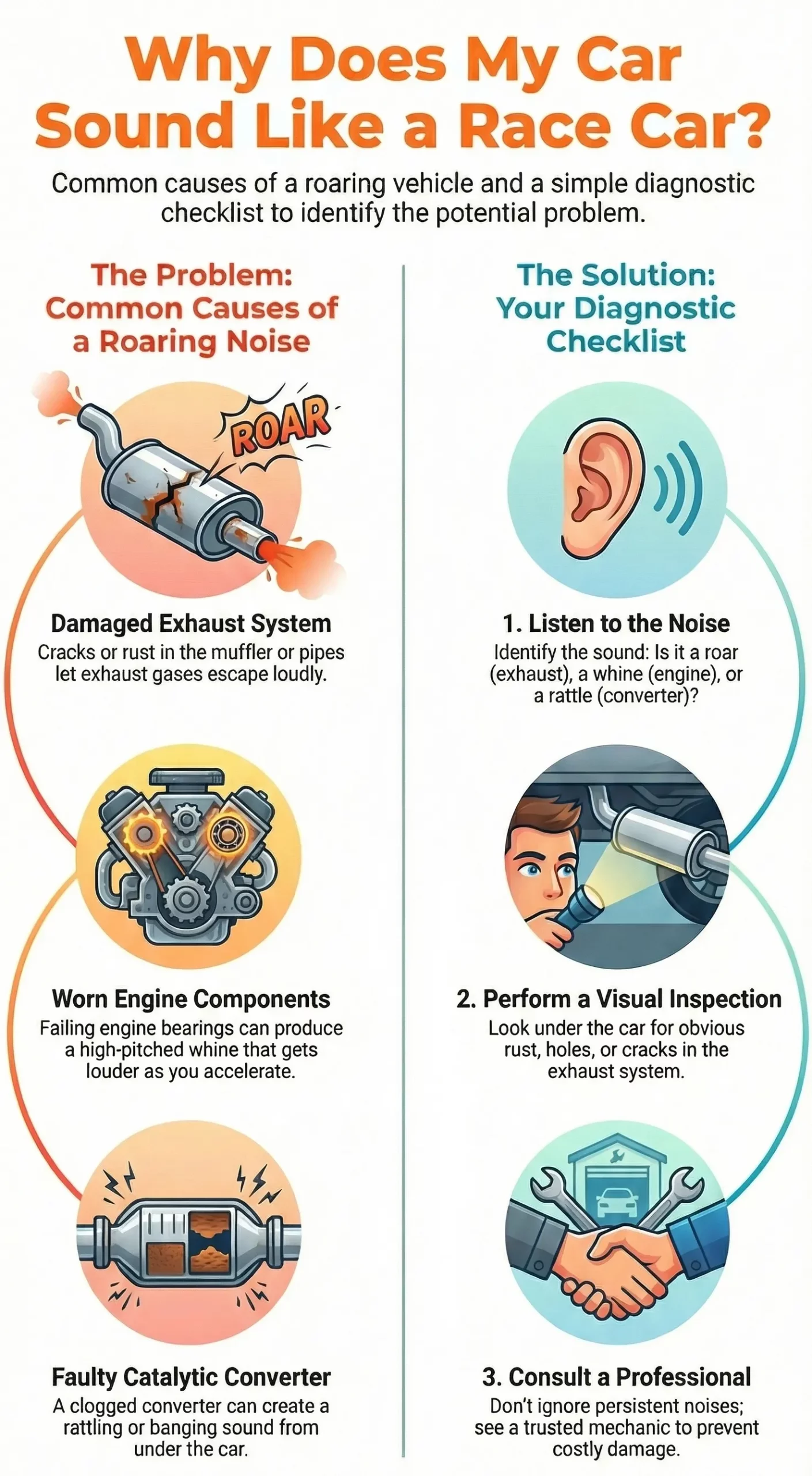
1. When the Noise Happens (Acceleration, Idling, Turning)
To accurately diagnose the cause of the loud engine noise, it’s essential to note when the noise occurs and under what conditions. Start by noticing how the car behaves when you accelerate, brake, or turn. Note whether the noise is constant or intermittent.
2. Perform a Visual Inspection
After observing the noise, visually inspect your car for any obvious signs of wear or damage. A visual inspection can help you identify issues such as rust, leaks, or loose parts that may be contributing to the noise.
Muffler and Exhaust System:
Inspect the muffler and exhaust pipes for cracks, holes, rust, or signs of damage. Damaged mufflers or exhaust pipes can cause loud, racecar-like noises as they allow exhaust gases to escape improperly.
Catalytic Converter:
Look for any dents, rust, or other signs of blockage in the catalytic converter. A clogged or damaged catalytic converter can cause a rattling noise, especially when the engine is revved up.
Suspension Components:
Check the suspension components, including shock absorbers, springs, and struts. Look for any signs of wear or loose parts. Worn suspension components can result in thumping, clunking, or rattling sounds, which may be mistaken for a race car noise.
3. Using Diagnostic Tools (OBD Scanner, Flashlight, Mirror)
Sometimes, a visual inspection alone may not be enough to identify the problem. Using diagnostic tools can provide a more thorough check and help pinpoint the exact cause of the noise.
OBD Scanner:
An OBD (On-Board Diagnostics) scanner connects to your car’s computer system and reads error codes that may indicate engine or exhaust problems. A diagnostic tool can identify issues that aren’t immediately visible, such as problems with the engine control system or exhaust system.
Flashlight and Mirror:
A flashlight and mirror can help you look into hard-to-reach areas of your car, such as beneath the vehicle or inside the exhaust system. These tools help you get a clearer view of any cracks, leaks, or other damage that might be contributing to the noise.
Mechanic’s Gloves and PPE:
Wearing gloves and personal protective equipment (PPE) helps keep you safe while handling potentially sharp or hazardous parts during the inspection.
By using these tools and techniques, you can better understand the issue and potentially resolve the problem before it becomes more severe.
4. Listening for Specific Engine and Exhaust Noises
One of the most important things to pay attention to is how your car sounds when you accelerate. If the noise only happens when you press the gas pedal, it’s likely related to the exhaust system, engine, or suspension. Here’s what you should listen for:
- Loud Roaring or Growling: This is often caused by a faulty muffler or exhaust pipe.
- Whining or Grinding: If you hear a whining sound, it could indicate a problem with the engine bearings or timing belt.
- Rattling or Banging: A rattling noise may be due to a clogged catalytic converter or damaged suspension components.
Listening for these specific sounds can help you narrow down which component is at fault, whether it’s the exhaust system, engine, or suspension.
5. Checking for Exhaust Leaks, Damage, or Blockages
Leaks, especially in the exhaust system, are common culprits behind loud car noises. A small crack or hole in the exhaust pipes can let exhaust gases escape, causing an irritating, race car-like noise. Here’s how to check for leaks:
Exhaust System:
- What to Check: Look for visible holes, rust, or cracks in the exhaust pipes and muffler.
- How to Check: With the engine off, feel around the exhaust system for any air leaks. Be cautious, as the system can be hot after driving.
Catalytic Converter:
- What to Check: Listen for a rattling noise under the car when revving the engine, which may indicate a clogged or damaged catalytic converter.
- How to Check: If you suspect a catalytic converter issue, check for any noticeable dents or damage to the component.
Checking for these issues can help identify the cause of the noise and guide you toward a solution.
Conclusion
If your car sounds like a racecar, don’t ignore it! While some noise-related issues can be fixed with simple repairs, others can signal serious problems that require expert attention. The sooner you address the issue, the less likely it is to lead to costly repairs or safety risks.
When you’re dealing with persistent noises, performance issues, or other concerning symptoms, it’s always best to visit a trusted mechanic. They have the experience, tools, and knowledge to properly diagnose the problem and ensure your car is running smoothly and safely.
At Torrance Motors, we specialize in diagnosing and fixing exhaust issues, engine problems, suspension repairs, and more. Don’t let a racecar-like noise keep you on edge, schedule a visit with us today to get your car back to its quiet, efficient self!