

Car Making a Clunking Noise When Driving? What It Means and How to Fix It
Hearing a clunking noise while driving can be unsettling. You might wonder, “What’s causing this noise, and how can I fix it?” A car making a clunking noise when driving is often more than just an annoying sound. It could be a sign of underlying issues in your vehicle, such as suspension problems, worn-out components, or exhaust system malfunctions. Ignoring these sounds can lead to further damage, reduced safety, and costly repairs down the road.
In this guide, we’ll explore the common causes of clunking noises, how to diagnose them, and the steps you can take to fix the problem. We’ll also give you practical tips on when it’s time to visit a mechanic.
1. Suspension Problems Causing Clunking Over Bumps or Turns
If you hear a clunking noise while driving, especially when you’re going over bumps or turning, it could be due to issues with your suspension system. The suspension is responsible for smoothing out the ride and maintaining the car’s stability. Over time, specific components can wear out or become damaged, leading to the characteristic clunking sound.
Potential Causes:
- Worn-Out Shock Absorbers: Shock absorbers dampen the movement of your car’s springs. When they wear out, they can cause a clunking noise, especially when driving over uneven surfaces or bumps.
- Bad Ball Joints: The ball joints connect the wheels to the suspension system. If they become worn out or damaged, they can cause a clunking sound when turning or driving over bumps.
- Damaged Control Arm Bushings or Stabilizer Bar Links: The control arm bushings help connect the suspension to the car’s frame, and when they wear out, they can result in rattling or clunking noises. Stabilizer bar links, which help reduce body roll during turns, can also wear out and cause noise.
How to Fix It:
- Shock Absorber Replacement: If the shock absorbers are worn, replacing them is a quick fix that restores smooth driving and reduces noise.
- Ball Joint and Control Arm Replacement: Replacing worn ball joints, control arm bushings, or stabilizer bar links is necessary to prevent further damage to your suspension.
If you’re hearing a clunking noise while driving over bumps, it’s essential to get your suspension system inspected as soon as possible to avoid worsening the problem.
2. Loose or Damaged Exhaust System Components
Your car’s exhaust system is designed to direct gases away from the engine, reducing noise and improving performance. However, if there’s damage or a loose part, it can cause your car to make a clunking noise when driving or when accelerating.
Potential Causes:
- Loose Exhaust Hangers: The exhaust system is held in place by hangers; if one becomes loose, it can cause a rattling or clunking sound.
- Broken Exhaust Mounts: If the exhaust mounts that secure the exhaust system to the car’s undercarriage are damaged, the system can move, resulting in unwanted noise.
How to Fix It:
If the exhaust hangers are loose, tightening them can resolve the issue. Damaged or broken exhaust mounts should be replaced to stop the exhaust system from moving and causing noise. If the noise is noticeable only when accelerating, it’s likely due to a loose exhaust component that needs attention.
3. Worn or Broken Sway Bar Links
If your car makes a clunking noise when turning or when driving over uneven surfaces, it could be due to worn-out sway bar links. The sway bar helps reduce body roll and improve stability when turning, and the links connect the sway bar to the vehicle’s suspension system.
Potential Causes:
- Worn or Broken Sway Bar Links: Over time, the sway bar links can wear out or become damaged, causing them to make noise when the suspension moves during turning or driving over bumps.
If the sway bar links are worn or broken, replacing them will restore proper suspension function and eliminate the clunking sound. If you hear a clunking noise when driving slow or when turning, the sway bar links are likely the culprit.
4. Worn Engine or Transmission Mounts
Another common cause of clunking noises when driving is worn-out engine or transmission mounts. These mounts secure the engine and transmission to the car’s frame, and when they become damaged or worn, they can cause the engine or transmission to move excessively, creating a thudding or clunking noise.
Potential Causes:
- Engine Mounts: Engine mounts keep the engine in place, and if they wear out, they can cause excessive movement, leading to clunking noises when accelerating or shifting gears.
- Transmission Mounts: Similarly, worn transmission mounts can cause similar issues, producing noise when the car is in gear or when shifting between gears.
Replacing worn-out engine and transmission mounts can eliminate the noise and prevent further damage to your car. If you’re experiencing a thudding noise when driving or during acceleration, it’s time to inspect the engine and transmission mounts.
5. Faulty Steering Components
When your car starts making a clunking noise during turns, it could be a problem with the steering system. Steering components, such as the steering rack, tie rods, and steering column, can wear out over time, leading to unusual sounds. These noises often occur when the car is turning or when the suspension is engaging.
Potential Causes:
- Worn or Loose Steering Rack: The steering rack converts the movement of the steering wheel into the rotation of the wheels. If it becomes loose or worn, it can produce a knocking or clunking sound.
- Bad Tie Rods: Tie rods connect the steering rack to the wheels. When these components are worn, they can cause the car to make a clunking noise when turning.
- Faulty Steering Column: The steering column connects the steering wheel to the rest of the steering system. Issues with the column can cause clunking noises during turns.
How to Fix It:
- Replace the Steering Rack or Tie Rods: If the steering rack or tie rods are the source of the noise, they should be replaced as soon as possible to restore proper steering function and eliminate the noise.
- Steering Column Inspection and Repair: If the issue is with the steering column, a mechanic like Torrance Motors will need to inspect and replace any worn components.
If you’re experiencing a clunking noise when turning or a clunking noise while driving during low-speed maneuvers, a problem with the steering system could be the cause.
6. Brake System Problems Causing Clunking When Braking
A clunking noise when braking can be particularly alarming, as it can indicate serious issues with your brake components. Your car’s brakes are one of the most critical safety features, and it’s essential to keep them in good working order. Worn or damaged brake system components can cause unusual sounds when applying the brakes or while driving.
Potential Causes:
- Loose or Worn Brake Pads: If your brake pads are loose or excessively worn, they can make a clunking noise when engaging the brakes.
- Misaligned or Loose Brake Calipers: The brake calipers press the brake pads against the disc to slow the vehicle. If the calipers are loose or misaligned, they can cause a clunking noise when braking.
How to Fix It:
- Replace or Tighten Brake Pads: If the brake pads are the problem, replacing them with new, properly installed pads should eliminate the noise.
- Caliper Alignment or Replacement: If the brake calipers are loose or misaligned, they should be tightened or replaced to ensure they function correctly and quiet the noise.
If you’re hearing a car noise while braking, it’s essential to have your brake system inspected to prevent further damage or safety hazards.
7. Worn or Broken Drive Axles
The drive axles transfer power from the engine to the wheels, allowing your car to move. Over time, the constant rotation of the axles can cause them to wear out. If the axles become damaged, they can make a loud clunking or popping sound, especially during turns or hard acceleration.
Potential Causes:
- Worn CV Joints: Constant velocity (CV) joints are located at the ends of the drive axles and allow the wheels to rotate while turning. When these joints wear out, they can make a popping or clunking noise.
- Damaged Axle Shafts: If the axle shafts themselves become bent or broken, they can cause loud clunking noises when the vehicle is in motion.
How to Fix It:
- Replace Worn CV Joints: If the CV joints are the issue, replacing them will eliminate the clunking noise.
- Axle Shaft Replacement: If the axle shafts are damaged, they will need to be replaced to ensure smooth power transfer and stop the noise.
If you’re hearing a clunking noise when turning or accelerating, your vehicle’s drive axles may need attention.
Diagnosing a Clunking Noise While Driving
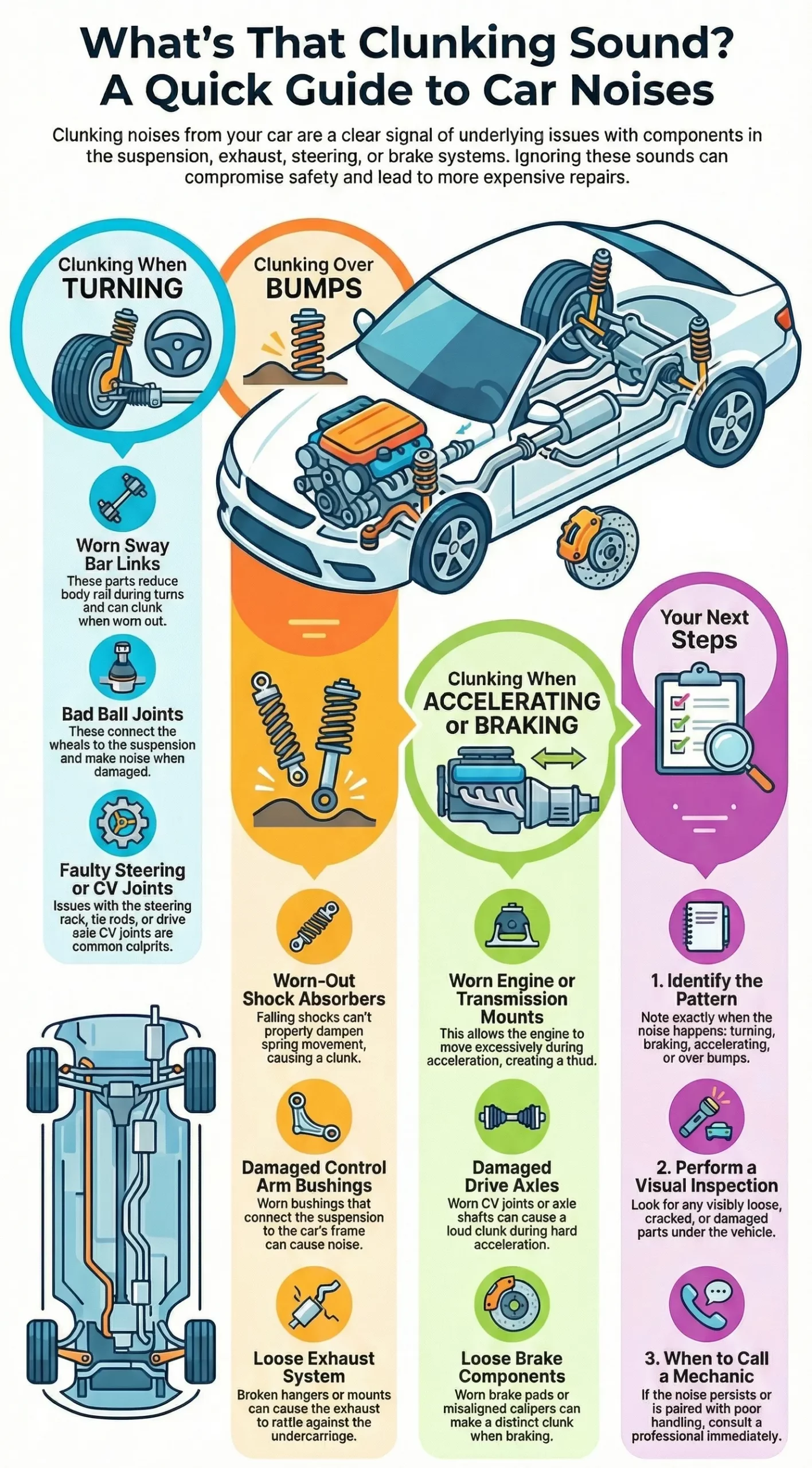
1. How to Identify When and Where the Clunking Noise Occurs
To correctly identify the source of the clunking noise, it’s essential to pay close attention to when it occurs. Start by noting whether the noise happens when you accelerate, brake, turn, or drive over bumps. Understanding the pattern of when the noise occurs can provide vital clues about which system is causing the issue. If the noise occurs consistently during acceleration, it may indicate problems with the drivetrain or exhaust system.
A noise that occurs when turning may indicate issues with the steering system or suspension components, while a noise over bumps is often linked to suspension problems. The nature of the noise, whether constant or intermittent, can also help narrow down the potential causes.
Next, conduct a visual inspection of your vehicle. Start by checking under the car for any visible signs of damage such as worn-out suspension components, broken exhaust hangers, or cracked engine mounts. Also, inspect your brake system for worn brake pads, loose calipers, or damaged components that might be causing the clunking sound.
If everything seems intact but the noise persists, listening closely to the sound itself is crucial. Is it a deep thudding, a rattling, or a scraping sound? Understanding the tone and frequency of the noise can point you to the right area of concern, whether it’s related to suspension, exhaust, or engine components.
2. Visual Inspection Checklist for Clunking Noises
If the clunking noise persists after basic fixes or you’re unable to pinpoint the source, it’s time to consult a professional from Torrance Motors . There are a few key signs that indicate you should seek expert help sooner rather than later. First, if the noise persists despite replacing worn components or tightening loose parts, the problem may be more complex and require further investigation. Second, if the clunking noise is accompanied by performance issues such as a loss of power, difficulty steering, or poor handling, it’s crucial to have your vehicle inspected. These symptoms could suggest a more serious problem with the suspension, drivetrain, or steering system that may compromise your vehicle’s safety.
Additionally, if you notice signs of overheating, fluid leaks, or a burning smell along with the clunking noise, it’s essential to stop driving the car immediately. Overheating and fluid leaks could indicate engine or transmission issues that could cause significant damage if left unaddressed. A mechanic can use diagnostic tools to pinpoint the problem and recommend the most effective repair solution.
3. Preventive Maintenance Tips to Avoid Clunking Noises
To avoid future clunking noises and ensure your car runs smoothly, regular maintenance is key. One of the most important steps is to regularly inspect your suspension system. Have your shock absorbers, ball joints, and control arm bushings checked for wear at routine intervals. These components are vital for maintaining a smooth ride, and replacing worn parts early can prevent clunking noises caused by suspension failure. Additionally, don’t overlook the importance of checking the exhaust system. Tighten any loose exhaust mounts and look for leaks during routine maintenance to avoid rattling or clunking sounds from a loose exhaust system.
Steering and engine mounts also require attention. Over time, engine and transmission mounts can wear out, causing the engine to shift and create noise. Regularly inspect your steering components and engine mounts to ensure they are secure and functioning correctly. By staying on top of these maintenance tasks, you can avoid the most common causes of clunking noises and keep your car running quietly and efficiently.
Conclusion
If your car is making a clunking noise while driving, it’s essential to address the problem promptly. Whether it’s due to suspension issues, loose exhaust components, or worn-out steering parts, identifying and fixing the source of the noise will save you time, money, and potentially serious repair costs in the future. Regular maintenance and early problem detection are the best ways to avoid loud, annoying sounds and keep your vehicle in top condition.
If you’re hearing a clunking noise while driving, don’t hesitate to get in touch with a professional mechanic. At Torrance Motors, we specialize in diagnosing and fixing suspension issues, engine mounts, and exhaust system repairs. Contact us today to schedule an inspection and get your car back to its smooth, quiet self!