

When your car’s engine begins to fail, the prospect of an expensive replacement might leave you wondering if there’s a more affordable option. A rebuilt engine is one potential solution that can restore your vehicle’s performance at a lower cost. If you’re asking yourself, “How much does it cost to rebuild an engine?”, you’ve come to the right place. This article will walk you through the cost breakdown of rebuilding an engine in 2026, how to assess whether a rebuild is right for you, and how various factors affect the overall price.
At Torrance Motors, we specialize in engine diagnostics, repairs, and replacements. Whether you’re considering an engine rebuild to restore your car’s performance or simply need more information on the process, we’re here to help. Keep reading for a detailed look at engine rebuild costs, what influences pricing, and how to make the best decision for your car.
What Is an Engine Rebuild?
An engine rebuild involves disassembling your car’s engine, inspecting its components, and replacing or refurbishing parts that have worn down or been damaged. Unlike a full engine replacement, where the entire engine is swapped out, rebuilding restores the existing engine while keeping most of its original components. This process can save you money while extending your vehicle’s life.
How Does an Engine Rebuild Work?
The rebuild process typically follows these steps:
Engine Disassembly and Tear-Down
The first step in an engine rebuild is disassembly, where the engine is carefully taken apart for inspection. If the engine is in the car, it may need to be removed, especially if the vehicle’s layout makes access to the engine components difficult. This step involves removing external parts such as exhaust manifolds, valve covers, and other components that may obstruct access to the internal engine components. Once the engine is disassembled, the mechanic can get a detailed view of its condition. This process requires precision to avoid damaging any parts that could be reused, which is crucial for keeping costs down during the rebuild.
Engine Component Inspection and Measurement
Once the engine is disassembled, each component is thoroughly inspected for wear, damage, or any signs of failure. Key engine components, such as pistons, crankshaft, valves, and bearings, are carefully examined for signs of wear and tear. The mechanic looks for cracks, corrosion, and uneven wear patterns that could indicate larger issues. Any parts that show significant damage or wear that can’t be repaired will need to be replaced. This inspection is vital because it helps the mechanic determine what needs repair, what needs replacement, and what can be reused in the rebuilt engine.
Engine Cleaning and Machine Shop Work (Machining)
After inspection, the usable parts are cleaned thoroughly to remove any dirt, oil engine, or grime that has accumulated over time. For parts like the cylinder head and crankshaft, which may have minor imperfections or wear, machining is often required. Machining involves smoothing out the surfaces or resizing parts to restore their original shape and function. For example, the cylinder head might need to be resurfaced to ensure a perfect seal once the engine is reassembled. This process helps ensure that all components are in optimal condition and ready for reassembly.
Replacing Worn Engine Parts (Gaskets, Seals, Rings, Pistons)
Once the cleaning and machining are complete, the next step is replacement. Any worn-out or damaged parts that cannot be restored are replaced with new or refurbished components. Commonly replaced parts include piston rings, gaskets, and seals, which are essential for ensuring proper engine compression and preventing leaks. In some cases, if specific parts are no longer available or are excessively worn, high-quality aftermarket or OEM (Original Equipment Manufacturer) parts will be used to maintain the engine’s reliability and performance. The cost of replacing parts can add up, but it’s necessary for restoring the engine’s functionality.
Engine Reassembly and Torque Specifications
After all the parts have been cleaned, machined, and replaced, the next step is reassembly. The engine is carefully reassembled, with each part reinstalled and bolted in place. Precision is key here, as any misalignment or improperly installed components can cause engine malfunctions once the engine is back in the car. Mechanics must follow specific manufacturer guidelines and torque specifications for each part to ensure everything fits together properly. The reassembly phase is an essential step in ensuring the engine is built to last and operates as intended.
Engine Testing After Rebuild (Leaks, Compression, Performance)
The final step in the rebuild process is testing. Once the engine is fully reassembled, it’s time to run tests to ensure everything is functioning correctly. This includes checking for leaks, listening for unusual sounds, and verifying that all components are operating at the correct temperature and pressure. The mechanic may also conduct a compression test to ensure the engine is firing properly and that there is no loss of power. After successful testing, the engine is ready to be reinstalled into the vehicle. This phase is critical for confirming that the rebuild has been done correctly and that the engine is in top working order.
Why Choose an Engine Rebuild? Benefits and Best Use Cases
Rebuilding an engine can be a good option when the damage is confined to specific components and the engine block is still in good condition. It is generally less expensive than a full engine replacement and can restore the vehicle to nearly new performance levels. Additionally, if your car is older but still reliable in other areas, an engine rebuild can breathe new life into it without the hefty cost of purchasing a new vehicle.
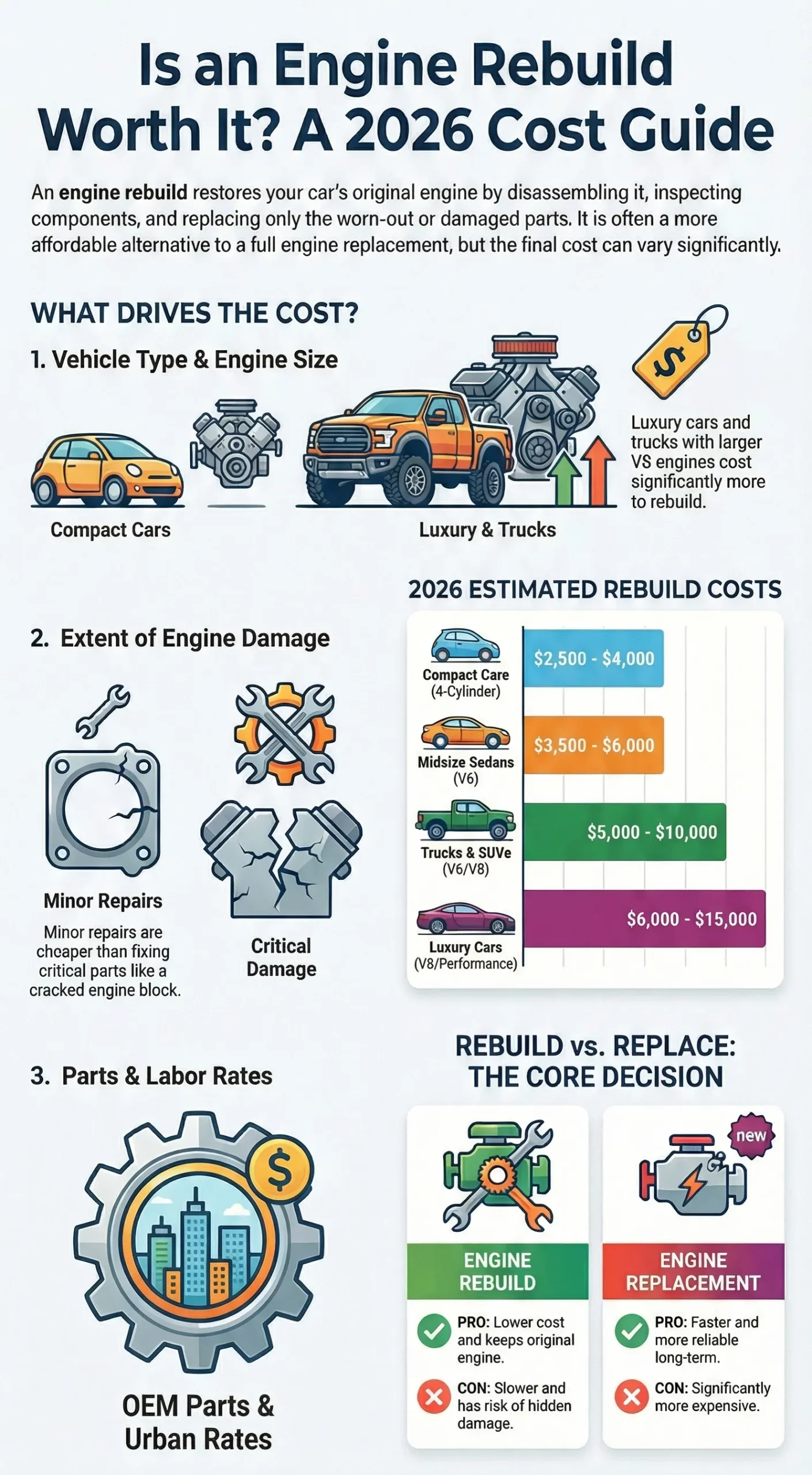
Factors That Affect Engine Rebuild Cost in 2026
Several factors influence the cost of an engine rebuild, and understanding them will help you better assess pricing and decide whether a rebuild is right for you.
1. Vehicle Type and Engine Size (4-Cylinder, V6, V8)
The make and model of your vehicle significantly impact the cost of rebuilding its engine. Smaller, less complex engines typically cost less to rebuild, while larger, high-performance engines or those found in luxury cars may cost more.
- Compact Cars (4-Cylinder): Rebuilding a 4-cylinder engine typically costs $2,500 to $4,000.
- Midsize Sedans (V6): A V6 engine rebuild generally costs between $3,500 to $6,000.
- SUVs and Trucks (V6/V8): Larger V6 or V8 engines often cost $5,000 to $10,000 to rebuild due to their complexity and size.
- Luxury Cars (BMW, Mercedes, etc.): Luxury car engines, such as those in BMW or Mercedes, can cost anywhere from $6,000 to $15,000 to rebuild, depending on the engine’s complexity and the need for high-quality OEM parts.
2. Extent of Engine Damage (Minor vs Severe)
The condition of the engine will heavily influence the cost. If only a few components need replacing, such as spark plugs, seals, or gaskets, the cost will be relatively low. However, if there is significant damage to critical components like the engine block, pistons, or crankshaft, the rebuild can become quite expensive. The more extensive the repairs, the higher the total cost will be.
- Minor Damage: For engines with minor issues, like worn gaskets, a rebuild may cost $2,500 to $6,000.
- Severe Damage: Engines with more serious issues, such as a cracked block or severely damaged pistons, may cost upwards of $10,000 to rebuild.
3. Labor Cost for Engine Rebuild (Hours and Location)
Labor is one of the most significant expenses in an engine rebuild. The cost of labor varies depending on the mechanic’s experience, the complexity of the job, and the region where the work is done. Urban areas with higher living costs typically have higher labor costs. On average, labor costs can range from $500 to $2,500.
- Labor Hours: The time required to rebuild an engine can vary significantly. For most vehicles, labor can range from 15 to 30 hours, depending on engine complexity and design.
4. Engine Rebuild Parts Cost
Another key cost factor is the price of parts. An engine rebuild requires various components, including gaskets, seals, pistons, and sometimes specialized parts such as valves or cylinder heads. The choice between OEM (Original Equipment Manufacturer) and aftermarket parts can affect overall cost.
- OEM Parts: Generally more expensive but offer better quality and fitment.
- Aftermarket Parts: Often cheaper, but quality can vary by brand and part.
Engine Rebuild vs Engine Replacement: Which Is Better for Your Car?
When faced with engine issues, car owners often struggle with the decision of whether to rebuild or replace the engine entirely. Both options have pros and cons, and the right choice depends on factors such as cost, the extent of the damage, and the vehicle’s age.
1. 4-Cylinder Engine Rebuild Cost (Compact Cars)
Pros:
- Lower Cost: Rebuilding is typically much cheaper than replacing the engine, especially if only a few components need to be replaced.
- Restores Original Engine: Keeps your vehicle’s original engine, which may be beneficial for car collectors or for those who prefer to maintain their vehicle’s original components.
- Customizable: You can choose to upgrade some parts during the rebuild, potentially improving the engine’s performance.
Cons:
- Labor-Intensive: The rebuild process is time-consuming and requires skilled labor, potentially increasing overall costs.
- Hidden Damage: Sometimes hidden damage is uncovered during the rebuild, leading to unexpected costs.
2. V6 Engine Rebuild Cost (Midsize Sedans)
Pros:
- New Engine: A new engine will be free from the wear and tear that your old engine might have. This provides peace of mind for long-term reliability.
- Faster: Replacing the engine typically takes less time than rebuilding it, as it doesn’t require disassembling and inspecting all parts.
Cons:
- High Cost: Replacing the engine is often more expensive than rebuilding it.
- No Connection to Original Engine: If you’re emotionally attached to your vehicle’s original engine, a full replacement might not feel the same.
How Much Does It Cost to Rebuild an Engine? Price Breakdown by Vehicle Type
| Vehicle Type | Engine Type | Typical Rebuild Cost |
| Compact Cars | 4-Cylinder | $2,500 to $4,000 |
| Midsize Sedans | V6 | $3,500 to $6,000 |
| Trucks & SUVs | V6/V8 | $5,000 to $10,000 |
| Luxury Cars (BMW, Mercedes) | V8/Performance | $6,000 to $15,000 |
Conclusion
Rebuilding an engine can be a cost-effective way to restore your car’s performance, especially compared to replacing the entire engine. While it requires careful consideration of the car’s condition, the extent of the damage, and the cost of parts and labor, a rebuild can provide a reliable, long-lasting fix without the high price of an engine replacement.
At Torrance Motors, we offer expert engine diagnostics and rebuilding services. If you’re looking for a trustworthy mechanic to help you decide whether a rebuild is right for your vehicle, reach out to us today for a consultation. Our team is here to guide you through the process and ensure your car runs smoothly for years to come.
